
Evaluating 3D Print Car Part Durability vs CNC Machining
Views: 3 Author: Allen Xiao Publish Time: 2025-08-01 Origin: Site


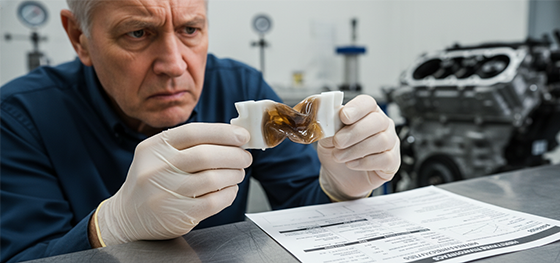
The acrid, sickening smell of melting polylactic acid (PLA) dripping onto a hot V8 engine block is a mistake a junior automotive engineer only makes once. Last year, a racing client handed me a shattered polymer suspension mount that snapped perfectly cleanly along its layer lines the moment the car hit a pothole. Holding the ruined plastic in my hands, I ran my thumb over the brittle, delaminated ridges. It was a textbook example of confusing desktop hobbyist materials with industrial-grade mechanical reality. Designing a functional 3d print car part requires brutally discarding marketing hype and respecting the unforgiving physics of the open road.
Prototyping complex intake manifolds or custom dashboard bezels forces procurement managers to choose between additive manufacturing and subtractive CNC machining. One technology builds geometries from nothing using powdered polymers and high-power lasers, while the other violently carves solid aluminum billets with spinning carbide. Mixing up these two structural paradigms guarantees catastrophic field failures.
Surviving the automotive environment demands absolute mastery of thermal deflection temperatures and anisotropic material limits. Fabricators must mathematically calculate when a glass-filled nylon print can safely replace a costly machined metal bracket. Precision economics relies entirely on matching the specific polymer chemistry to the brutal kinetic stresses hidden beneath the hood.
content:
3D Print Car Part vs CNC Machining: How Do They Compare?
When Should You Specify Additive Automotive Components?
When MUST You Avoid FDM Printing for Structural Loads?
How Does Heat Deflection Destroy Engine Bay Prototypes?
What Are the True NRE Cost Breakdowns for Rapid Scaling?
How Does Jucheng Optimize Auto Prototyping in Shenzhen?
What Are the Most Critical Automotive 3D Printing FAQs?
3D Print Car Part vs CNC Machining: How Do They Compare?
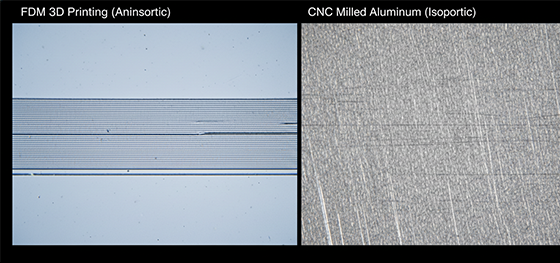
Does 3D printed nylon possess the exact same tensile strength as CNC machined nylon? Absolutely not. CNC machined parts boast completely isotropic strength from a solid, compressed billet, whereas extrusion-based 3D prints suffer from anisotropic weakness, specifically tearing apart easily along the Z-axis layer boundaries.
Industrial CNC machining removes material from heavily compressed, stress-relieved plastic rods. If you mill an engine transmission mount from solid Delrin, that part will absorb kinetic shock flawlessly regardless of which direction the impact comes from. The raw crystalline structure remains undisturbed, delivering pure, uncompromised catalog-rated mechanical data that automotive engineers can trust blindly.
Basic Fused Deposition Modeling (FDM) builds parts by stacking melted strings of plastic. The thermal bond between layer 10 and layer 11 is mathematically much weaker than the continuous filament strand itself. However, high-end Selective Laser Sintering (SLS) completely eliminates this layer weakness. By using high-power lasers to fuse nylon powder, SLS creates a nearly 100% dense, isotropic solid capable of surviving aggressive road testing without shattering.
| Manufacturing Metric | Industrial 3D Printing (SLS/MJF) | 5-Axis CNC Machining | Automotive Design Impact |
|---|---|---|---|
| Geometric Complexity | Infinite (Internal channels free) | Limited (Line of sight required) | Printing builds impossible cooling manifolds |
| Structural Rigidity | Moderate to High | Absolute Maximum | CNC dominates load-bearing chassis components |
| Surface Finish Tolerance | Rougher (Powder texture) | Flawless Mirror Finish | CNC required for tight bearing press-fits |
| Material Waste | Near Zero (Recycled powder) | High (Up to 80% chips) | Printing slashes material costs on hollow parts |
When Should You Specify Additive Automotive Components?
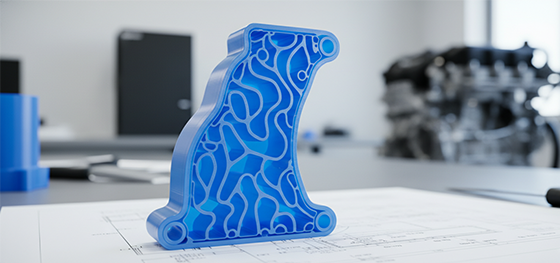
Are printed components viable for end-use functional testing on a race track? Yes, provided you specify engineering-grade nylon or TPU. They are ideal for complex HVAC ducting, custom dashboard gauge pods, and intricate fluid manifolds that would require expensive multi-part CNC assemblies.
Hardware engineers exploit additive manufacturing specifically for conformal cooling and topology optimization. A racing team can design a brake caliper cooling duct with bizarre, spiraling internal pathways that perfectly wrap around the tight chassis dimensions. A CNC milling cutter simply cannot bend around corners to machine these internal voids. 3D printing executes this impossible geometry flawlessly in a single overnight build.
Bridge production thrives on powder-bed technologies like Multi Jet Fusion (MJF). When an automotive EV startup needs 300 custom wiring harness clips instantly, cutting an eighty-thousand-dollar steel injection mold paralyzes their cash flow. Dropping those 300 clips into a single MJF build chamber delivers production-grade, highly flexible nylon parts the very next day without a single dollar spent on NRE tooling.
When MUST You Avoid FDM Printing for Structural Loads?
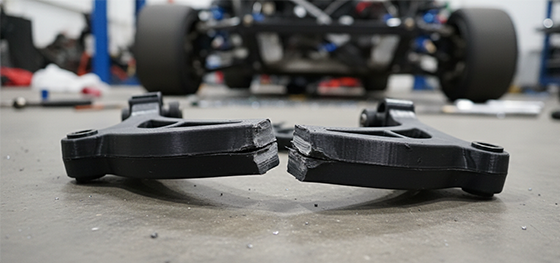
Can an FDM printed bracket safely support an alternator under heavy vibration? Never. Basic extrusion prints suffer catastrophic fatigue failure under continuous harmonic engine vibration, eventually tearing themselves apart along the weak layer boundaries.
Placing an anisotropic FDM part under sheer kinetic stress is engineering suicide. I have witnessed printed suspension mounts crack instantly the moment a mechanic applied ninety foot-pounds of torque to the mounting bolt. The plastic simply lacks the dense molecular cross-linking required to prevent the layers from shearing violently away from one another during acceleration.
You must immediately upgrade to CNC machined aluminum or forged steel whenever the blueprint demands rigid structural integrity. If a part failure results in a loss of vehicle control, steering degradation, or pressurized brake fluid blowout, additive polymers must be completely removed from the prototyping equation. Human safety factors demand unyielding solid metal.
How Does Heat Deflection Destroy Engine Bay Prototypes?
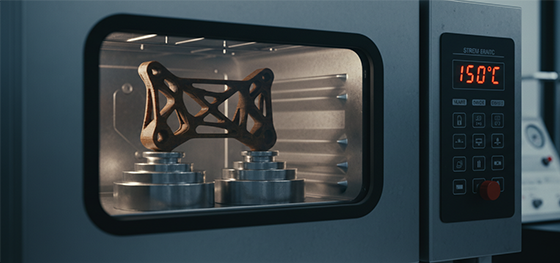
Will standard ABS prints survive bolted directly near an exhaust manifold? No. Engine bays routinely exceed 120°C (250°F). Standard plastics hit their glass transition temperature long before this, softening like warm butter and collapsing entirely under their own gravitational weight.
Evaluating the Heat Deflection Temperature (HDT) separates amateur cosmetic designs from aerospace-grade survival. If you mount a beautiful resin SLA intake manifold onto a turbocharged engine, the ambient exhaust heat will slowly deform the plastic. The vacuum seal breaks, the engine runs dangerously lean, and catastrophic internal detonation occurs within minutes of the initial track test.
Surviving the under-hood inferno mandates exotic, ultra-high-performance polymers. Industrial systems printing Ultem 9085 or PEEK easily withstand continuous operating temperatures pushing 200°C without shedding a single micron of dimensional tolerance. These advanced aerospace filaments aggressively rival the thermal stability of raw aluminum while shaving pounds of weight off the front axle.
What Are the True NRE Cost Breakdowns for Rapid Scaling?

Is 3D printing inherently cheaper than CNC machining for car parts? Only for complex, hollow geometries in extreme low volumes. If you need a simple, solid block of material, CNC machining a raw billet often costs significantly less than buying expensive specialized polymer filaments.
Additive manufacturing eliminates CAM programming and fixturing setups, dragging initial NRE costs down to practically zero. However, producing 500 massive car bumpers via 3D printing is financial insanity. The printer takes excruciatingly long hours to build massive objects, driving the variable unit cost sky-high. The laser beam can only move so fast across the powder bed.
Subtractive machining dominates large, simple geometric forms. Slapping a thick aluminum plate onto a high-speed router allows massive cutting heads to clear pounds of metal in seconds. Procurement executives must aggressively plot the volumetric intersection curve where the slowness of the printer begins incinerating the budget compared to the raw muscle of a CNC spindle.
How Does Jucheng Optimize Auto Prototyping in Shenzhen?
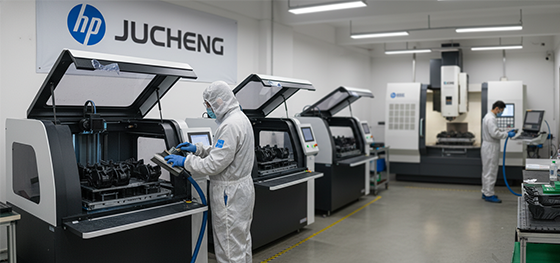
Can a single facility seamlessly combine 3D printed plastics with tight CNC metal tolerances? Yes. Operating within the [2026] Shenzhen precision manufacturing hub, Jucheng merges high-end HP MJF additive technologies directly alongside our 150-machine CNC fleet.
Navigating global hardware procurement requires an absolute rejection of unverified plastic tolerances. If you print a complex nylon intake but need a perfectly flat, leak-proof mating surface, we mount the 3D printed part directly onto a 5-axis CNC. We physically mill the printed plastic face flat to guarantee an absolute micron-level vacuum seal for your gaskets.
Our engineering teams intervene heavily during the CAD review phase. Backed by uncompromising ISO9001:2015 and IATF16949 automotive protocols, our Free DFM reviews identify thermal failure risks before the laser fires. We execute intelligent hardware scaling without MOQ restrictions, ensuring your exact digital design survives the harsh realities of the racetrack.
What Are the Most Critical Automotive 3D Printing FAQs?
Resolving hardcore kinetic and thermal variables prevents devastating assembly line bottlenecks when scaling complex digital automotive models into physical prototypes.
Can you thread a bolt directly into a 3D printed plastic hole?
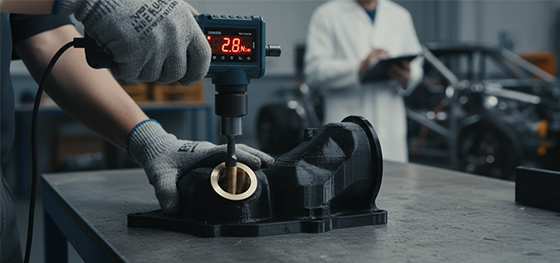
It is highly discouraged for automotive applications. Cutting threads directly into layered plastic creates massive stress concentrators that strip out instantly under torque. You must design the CAD file to accept ultrasonic brass heat-set inserts. Melting these metal anchors into the plastic provides permanent, indestructible machine threads.
Does SLA resin printing work for exterior car body panels?
No. Standard stereolithography (SLA) resins are notoriously brittle and hypersensitive to prolonged ultraviolet (UV) radiation. If you bolt a raw SLA resin spoiler to a car, the sunlight will slowly degrade the polymer chains over weeks, turning it yellow and causing it to shatter catastrophically upon the first gravel impact.
Can a 3D printed automotive part be electroplated with chrome?
Yes, but the preparation is excruciating. Because plastics are non-conductive, the part must be sanded completely flat, coated in a specialized conductive copper or nickel spray, and then submerged in the chemical bath. Any microscopic layer lines left un-sanded will be violently magnified and highlighted by the shiny chrome finish.



ㆍPrivacy: We respect your privacy. Here you can find an example of a non-disclosure agreement. By submitting this form, you agree to our terms & conditions and privacy policy.