
FDM 3D Printing Materials
Fused Deposition Modeling (FDM) is the most widely accessible additive manufacturing technology, known for its ability to print durable parts using real engineering thermoplastics. Unlike other 3D printing methods that use simulants, FDM utilizes actual grades of ABS, Polycarbonate, and High-Performance PEI. At JUCHENG, we go far beyond desktop printing. We operate a fleet of large-format industrial FDM systems capable of processing high-temperature super-polymers. From rapid prototyping with ABS Plus to manufacturing flight-ready components with Ultem 9085, our facility delivers strong, reliable parts for functional testing, jigs, fixtures, and end-use production.
JUCHENG's Industrial FDM Capabilities
We focus on structural integrity and material performance:
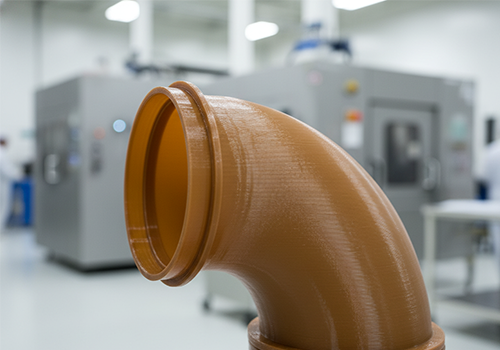
- Large-Scale Production: Our industrial printers feature massive build chambers, allowing for the production of large single-piece automotive panels or aircraft ducting without assembly.
- High-Performance Materials: We specialize in printing high-temperature materials like PEI (Ultem) and PC, which require heated chambers to prevent warping—capabilities not found in standard printers.
- Soluble Supports: We use industrial soluble support materials, enabling the creation of complex internal geometries and hollow cavities that are easily cleaned without manual breaking.
- Real-World Testing: Because we use production-grade thermoplastics, our FDM parts are suitable for rigorous thermal, chemical, and mechanical testing.
Advantages of FDM 3D Printing Materials
| Advantage | Detailed Description | Key Benefit |
| Real Thermoplastics | Uses the same material chemistry as injection molding (e.g., real ABS, PC). | Parts exhibit the true thermal and chemical properties of the production material. |
| High Strength & Durability | Industrial FDM parts are tough and impact-resistant. | Ideal for functional prototypes, manufacturing tools, and structural aids. |
| Heat & Chemical Resistance | Materials like PEI (Ultem) and PPSF offer extreme performance. | Suitable for aerospace components, under-hood parts, and sterilization trays. |
| Large Part Capability | Can print parts up to nearly 1 meter in length. | Perfect for bumpers, dashboard panels, and full-scale mockups. |
| Cost-Effective | Economical for large, bulky parts compared to SLA or SLS. | Reduces costs for early-stage form and fit verification. |
Technical Parameters & Material Properties
We offer a tiered range of thermoplastics, from standard prototyping to aerospace-grade:
| Grade Category | Detailed Characteristics | Ideal Applications |
| Standard ABS / ABS Plus | The standard for general prototyping. Good tensile strength and impact resistance. Opaque finish. Available in multiple colors. Performance: Reliable mechanical properties for fit-check. | Functional prototypes, form/fit testing, concept models, consumer product housings. |
| ASA (UV Resistant) | Similar mechanical properties to ABS but with superior UV stability and weather resistance. Better aesthetics (matte finish) and layer adhesion. Performance: Does not yellow or degrade in sunlight. | Outdoor housings, automotive exterior parts, infrastructure fixtures, sporting goods. |
| PETG | Combines the ease of printing with good chemical resistance and toughness. Low shrinkage. Performance: Good impact resistance and chemical durability. | Fluid containers, packaging prototypes, protective guards, chemical resistant parts. |
| PC (Polycarbonate) | High tensile strength and impact resistance. Much stronger than ABS. High heat deflection temperature. Performance: Tough engineering thermoplastic. | Functional testing, high-load mechanical parts, tools and fixtures, molds. |
| PEI 9085 (Ultem 9085) | Aerospace-grade Polyetherimide. Flame-retardant (FST compliant). High strength-to-weight ratio. High heat resistance. Performance: Certified for flight hardware. | Aircraft interior components, ducting, lightweight structural brackets, railway parts. |
| PEI 1010 (Ultem 1010) | The highest heat resistance and tensile strength of any FDM material. Food-contact certified (NSF 51) and biocompatible (ISO 10993). Performance: Extreme thermal stability (up to 216°C). | Food production tools, medical device manufacturing aids, under-hood automotive parts. |
FDM Printing Guidelines & Design Tips
- Anisotropy: FDM parts are strongest in the XY axis and weaker in the Z axis (layer adhesion). We recommend orienting parts to align load paths with the XY plane.
- Layer Lines: Industrial FDM leaves visible layer lines (typically 0.12mm - 0.25mm). Parts can be sanded, painted, or vapor smoothed for a better finish.
- Wall Thickness: Recommended minimum wall thickness is 1.0mm - 1.5mm to ensure proper filling and strength.
- Tolerances: Typically +/- 0.5mm. For high-precision features, we recommend leaving stock material and CNC machining the critical dimensions post-print.
Application Scenarios
- Manufacturing Aids: Jigs, fixtures, assembly guides, robotic end-effectors (lightweight).
- Aerospace: Environmental control system ducting, interior panels, bezel covers (using PEI 9085).
- Automotive: Functional bumpers, air intake prototypes, fluid reservoirs.
- Industrial Equipment: Custom housings, replacement parts for legacy machines, conveyor components.
Physical Properties Table
| Property | ABS Plus | ASA | PC (Polycarbonate) | PEI 9085 (Ultem) | Unit |
| Tensile Strength | 33 | 34 | 68 | 72 | MPa |
| Flexural Modulus | 2,200 | 2,600 | 2,300153 | 2,500 | MPa |
| Heat Deflection (0.45 MPa) | 96 | 100 | 138 | 10,000 | °C |
| Elongation at Break | 6 | 5 | 4.8 | 5.8 | % |
| Flammability | HB | HB | HB | V-0 (FST) | Rating |

Request Your DFM & Quote – Upload Your Drawings
ㆍFill in your requirements and upload your 2D&3D file, we will feedback your project quotation and DFM within 24 hours.ㆍFile types: STEP, STP, IGES, IGS, SLDPRT, 3DM, SAT or X_T files File size: < 128 MB Part size: < 1500*1500*1500 mm
ㆍPrivacy: We respect your privacy. Here you can find an example of a non-disclosure agreement. By submitting this form, you agree to our terms & conditions and privacy policy.
ㆍPrivacy: We respect your privacy. Here you can find an example of a non-disclosure agreement. By submitting this form, you agree to our terms & conditions and privacy policy.