
Does Aluminum Anodized Processing Alter Thread Geometries?
Views: 7 Author: Allen Xiao Publish Time: 2025-11-14 Origin: Site


Specifying premium chemical finishes on engineering blueprints frequently triggers catastrophic factory nightmares if the designer lacks true thermodynamic experience. Demanding a flawless aluminum anodized exterior seems incredibly simple until your tightest mechanical bearing press-fits violently seize during final assembly. Hardware procurement managers constantly hemorrhage venture capital funding because they blindly assume chemical surface treatments have zero physical impact on raw digital CAD dimensions.

Transforming raw extruded metal into a scratch-resistant masterpiece requires navigating highly aggressive sulfuric acid baths. Submerging pristine CNC Machining components into electrified chemical vats physically alters the entire outer molecular structure of the billet. Failing to mathematically compensate for this aggressive chemical growth mathematically guarantees your expensive Aluminum chassis will completely fail strict quality control inspections upon arrival.
Surviving brutal marine environments heavily dictates pushing past standard cosmetic treatments entirely. Engineering maritime drone housings or heavy robotic joints practically requires deploying a military-grade Type III hardcoat to prevent immediate saltwater destruction. Executing this specific deep-penetrating process creates a massive dielectric oxide layer that actively resists extreme kinetic abrasion and horrifying chemical corrosion simultaneously.
Operating deep inside the Shenzhen precision manufacturing hub equips our veteran supply chain directors to actively block these devastating callout errors. We relentlessly force mechanical engineers to calculate exact dimensional tolerance stacking scenarios before the cutting spindle ever turns. Delivering truly functional hardware dictates that your primary machine shop must completely control the final chemical plating outcome without pointing fingers at third-party vendors.
content:
Defeating Dimensional Tolerance Stacking
Mastering Type III Hardcoat Physics
Navigating Aerospace Alloy Color Variations
JUCHENG Hub: Dominating Surface Treatments
Frequently Asked Questions: Chemical Coatings
Defeating Dimensional Tolerance Stacking

Does throwing a raw machined part into a chemical bath actually change its physical size?
Absolutely. The electrochemical oxidation process physically consumes microscopic layers of the base metal while simultaneously growing a brand new crystalline oxide structure outward, actively increasing the total geometric volume of the component.
Managing terrifying dimensional tolerance stacking separates elite hardware programs from amateur maker projects. Engineers designing watertight pneumatic Die Casting enclosures must deeply understand that a fifty-micron chemical coating grows twenty-five microns inward and pushes twenty-five microns outward. Failing to mathematically oversize your internal threaded holes prior to the acid bath means standard bolts will violently strip and seize instantly during assembly.
Executing flawless mechanical linkages strictly mandates extreme chemical masking protocols on the factory floor. Elite technicians utilize highly specialized, high-temperature silicone rubber plugs to meticulously plug every single critical bearing bore and fine-pitch thread before the part ever touches the sulfuric acid. Protecting these naked geometries ensures the bearing press-fits remain entirely untouched by the dimensional swelling.
Slashing assembly bottlenecks demands intense CAM programming compensation. Intelligent machinists deliberately cut external pegs slightly smaller and bore internal holes significantly larger, specifically anticipating the inevitable geometric expansion. Trusting a disjointed supply chain where the machine shop never communicates with the plating facility completely guarantees catastrophic interference failures on your production line.
Mastering Type III Hardcoat Physics
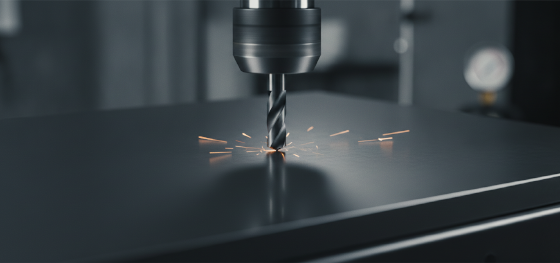
Will standard cosmetic oxidation protect a heavy robotic linkage from severe kinetic scratching?
Never. Standard Type II processing simply provides a microscopic, decorative colored skin. Surviving brutal physical abrasion strictly requires pushing high voltages through freezing cold acid to build a massive, impenetrable Type III sapphire-like barrier.
Deploying military-grade Type III hardcoat completely transforms the fundamental mechanical capabilities of raw alloys. Processing aerospace billets under these extreme thermodynamic parameters generates an incredibly dense surface boasting Rockwell hardness levels rivaling hardened tool Steel. Hardware procurement teams aggressively specify this exact treatment for massive industrial gears and sliding wear plates to eradicate frictional degradation completely.
Building a thick dielectric oxide layer provides profound electrical insulation advantages for sensitive medical electronics. Bare metallic enclosures naturally conduct terrifying electrical shorts that fry delicate internal motherboards instantly. Applying fifty microns of dense crystalline oxide actively blocks immense electrical voltages, acting as a permanent, built-in non-conductive shield guarding your expensive circuitry.
Cosmetic limitations heavily restrict designers utilizing heavy hardcoats. Because the dense crystalline structure grows so thick, the natural metallic pores aggressively close up, making it practically impossible to absorb bright, vibrant liquid dyes. Engineers must accept that true military-grade coatings naturally cure into dark, utilitarian greys, bronzes, or matte blacks.
| Chemical Processing Method | Coating Thickness (Microns) | Abrasion & Wear Resistance | Optimal Factory Application |
|---|---|---|---|
| Type II Standard (Cosmetic) | 5 to 25 Microns | Low (Easily scratched by steel) | Premium colored consumer electronics |
| Type III Hardcoat (Mil-Spec) | 25 to 100 Microns | Extreme (Sapphire-like hardness) | Heavy robotic linkages and sliding gears |
| Chemical Conversion (Alodine) | Practically Zero | Zero (Acts only as a paint primer) | Internal electrical grounding chassis |
| Electroless Nickel Plating | 10 to 50 Microns | Very High (Smooth lubricity) | High-pressure pneumatic fluid valves |
Navigating Aerospace Alloy Color Variations

Can a factory guarantee that all different metal grades will absorb cosmetic black dye identically?
Absolutely not. The specific chemical elements alloyed inside the raw metal billet actively interfere with the dye absorption, causing massive, unpredictable color variations across different part numbers.
Designing complex assemblies containing multiple different aluminum anodized components introduces severe cosmetic risks. Machining a baseplate out of standard 6061 billet yields a flawless, deep mirror-black finish. However, milling the attached suspension arms out of ultra-strong 7075 aerospace billet chemically prevents the dye from penetrating perfectly. The heavy zinc content inside the 7075 structure forcibly turns the "black" dye into an ugly, mottled yellowish-green tint.
Protecting your premium retail aesthetics absolutely demands utilizing consistent raw material grades across your entire visible assembly. Hardware startups frequently make the terrifying mistake of machining a prototype out of solid billet, then switching to heavy Injection Molding or die-cast alloys for mass production. Cast metals contain massive amounts of silicon, which chemically turns completely muddy and dark grey when exposed to standard oxidation baths.
Mitigating these visual disasters requires deep metallurgical authority before finalizing the purchase order. Veteran factory planners actively steer industrial designers away from impossible material combinations. When extreme 7075 yield strength is structurally mandatory, we strongly recommend deploying advanced secondary Painting or powder coating to guarantee uniform external aesthetics.
JUCHENG Hub: Dominating Surface Treatments
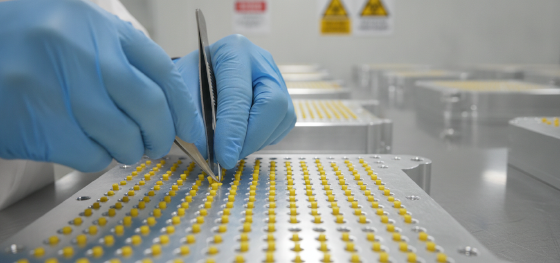
Why do aggressive hardware startups refuse to bounce their raw machined parts to isolated chemical plating shops?
Because splitting the manufacturing liability completely destroys quality control. When the final coated part fails inspection, the machinist blames the plating thickness, and the plater blames the machinist's tolerances.
Partnering with Jucheng Precision entirely eliminates this toxic, disjointed supply chain friction. We aggressively calculate exact aluminum anodized dimensional growth models directly into our CAM milling programs. Executing the raw material cutting and the final chemical oxidation under one massive Shenzhen roof ensures absolute engineering accountability from start to finish.
Delivering flawlessly sealed medical and aerospace components dictates deploying uncompromising Design for Manufacturability (DFM) audits instantly. We actively identify impossible blind holes that will dangerously trap boiling caustic acids. Securing these physical vulnerabilities prevents terrifying downstream chemical bleeding that destroys your premium assemblies weeks after leaving our factory floor.
Frequently Asked Questions: Chemical Coatings
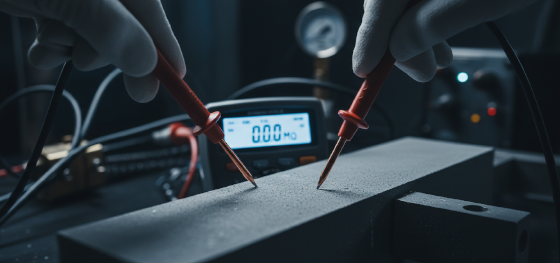
Will deep surface scratches immediately cause an oxidized aerospace bracket to red rust?
No. Non-ferrous alloys fundamentally cannot produce red iron-oxide rust. A deep mechanical scratch simply exposes the shiny raw silver metal beneath, which will naturally oxidize slightly against the ambient air but absolutely will not spread violently like rusting steel.
Does the intense chemical oxidation process successfully hide deep CNC tool marks?
Actually, it heavily magnifies them. Chemical conversion builds a perfectly uniform crystalline layer directly mirroring the underlying substrate topography. Any rough chatter marks, scratches, or jagged ridges left by a dull cutting spindle will become aggressively visible and shiny once the final sealing phase finishes.
Is it possible to chemically strip and re-coat a rejected enclosure without ruining it?
Yes, but it is incredibly destructive. Stripping the original oxide layer physically dissolves another microscopic layer of the base metal. Re-processing the same part practically guarantees your critical bearing dimensions will fall completely out of tolerance, rendering the salvaged component useless for precision assemblies.


ㆍPrivacy: We respect your privacy. Here you can find an example of a non-disclosure agreement. By submitting this form, you agree to our terms & conditions and privacy policy.