
Stainless Steel 316/316L CNC Machining Material
When standard 304 stainless steel cannot withstand the environment, Stainless Steel 316/316L is the mandatory upgrade. Distinguished by the addition of 2-3% Molybdenum, this austenitic alloy offers vastly superior resistance to pitting and crevice corrosion, particularly in chloride-rich environments like saltwater or chemical processing plants. At JUCHENG, machining this tough, work-hardening alloy is a daily operation. We employ rigid machining strategies and premium cutting tools to produce high-precision 316L components for the most demanding marine, medical, and pharmaceutical applications.
Stainless Steel 316/316L
JUCHENG's 316/316L Machining Capabilities
316 is tougher and less machinable than 304. We utilize advanced techniques to ensure quality:
- Rigid Machining: We use high-rigidity CNC centers to handle the higher cutting forces required for 316 without vibration, ensuring dimensional accuracy.
- Surface Integrity: We control cutting heat to prevent surface discoloration and maintain the passive oxide layer. We offer Electropolishing to further enhance corrosion resistance for medical and semiconductor parts.
- Deep Hole Drilling: We specialize in drilling deep, straight bores in 316L for fluid manifolds, using high-pressure through-spindle coolant to evacuate chips.
- Material Certification: We provide full traceability (Mill Certificates) confirming the Molybdenum content, essential for compliant medical and marine products.
Advantages of CNC Machining 316/316L
| Advantage | Detailed Description | Key Benefit |
| Superior Corrosion Resistance | The Molybdenum content specifically targets resistance to chlorides (salt) and acids. | The #1 choice for marine hardware and chemical processing equipment where 304 would rust. |
| Biocompatibility | Highly resistant to body fluids and sterilization processes. | The standard material for surgical instruments and temporary medical implants. |
| High Temperature Strength | Better creep resistance and strength at elevated temperatures than 304. | Suitable for jet engine parts, exhaust manifolds, and heat exchangers. |
| Excellent Weldability (316L) | Low carbon content eliminates carbide precipitation during welding. | Ideal for heavy-gauge welded assemblies that cannot be annealed after fabrication. |
| Cleanliness | Ultra-smooth surfaces can be achieved via electropolishing. | Critical for pharmaceutical and semiconductor manufacturing environments. |
Technical Parameters & Material Standards
We process both the standard and low-carbon versions for different needs:
| Grade Category | Ideal Applications | Detailed Characteristics |
| Stainless Steel 316 | High-temp chemical handling, heat exchangers, furnace parts, jet engine components. | Standard Grade. Contains higher carbon than 316L. Offers slightly higher tensile strength and better creep resistance at high temperatures |
| Stainless Steel 316L | Marine fittings, pharmaceutical tanks, surgical tools, semiconductor vacuum chambers, watch cases. | Low Carbon Grade. Carbon is limited to max 0.03%. Prevents sensitization (weld decay). It is the preferred choice for heavy-section welding and corrosive environments. |
CNC Machining Guidelines for 316
- Machinability: 316 is tougher than 304 (Rated ~35% machinability vs B1112). It work-hardens rapidly.
- Tooling Strategy: We use sharp, coated carbide tools and ensure a constant feed rate. "Dwelling" or rubbing the tool causes the surface to harden instantly, causing tool failure.
- Coolant: Heavy flood coolant is non-negotiable to remove heat and extend tool life.
- Post-Processing: Passivation (Nitric/Citric acid) is highly recommended after machining to remove any free iron and maximize the chrome-oxide passive layer.
Application Scenarios
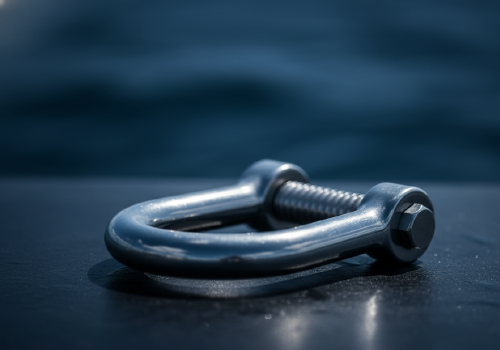
- Marine: Boat fittings, propeller shafts, rigging screws, desalination plant components.
- Medical: Surgical clamps, scalpels, orthopedic implants (temporary), fixation pins.
- Chemical & Pharma: Valves, pumps, mixing agitators, pressure vessels handling acids.
- Luxury Goods: High-end watch cases, jewelry (due to hypoallergenic properties).
- Energy: Nuclear fuel reprocessing and petroleum refining equipment.
Physical Properties Table
Comparison: 316L vs 304 (The Molybdenum Factor):
| Property | SS 316L | SS 304 | Unit |
| Density | 8.00 | 8.00 | g/cm³ |
| Tensile Strength | 485 | 515 | MPa |
| Yield Strength | 170 | 205 | MPa |
| Molybdenum Content | 2.0 - 3.0% | None | - |
| Corrosion Resistance | Superior | Good | - |
| Machinability | Difficult | Moderate | - |

Request Your DFM & Quote – Upload Your Drawings
ㆍFill in your requirements and upload your 2D&3D file, we will feedback your project quotation and DFM within 24 hours.ㆍFile types: STEP, STP, IGES, IGS, SLDPRT, 3DM, SAT or X_T files File size: < 128 MB Part size: < 1500*1500*1500 mm
ㆍPrivacy: We respect your privacy. Here you can find an example of a non-disclosure agreement. By submitting this form, you agree to our terms & conditions and privacy policy.
ㆍPrivacy: We respect your privacy. Here you can find an example of a non-disclosure agreement. By submitting this form, you agree to our terms & conditions and privacy policy.