
O-Series Oil Hardening Tool Steel Machining
For general-purpose tooling applications where the premium cost of high-alloy steels isn't justified, O-Series Tool Steels (specifically AISI O1) are the industry standard. As "Oil Hardening" cold work steels, they offer a superb combination of high surface hardness, good toughness, and machinability. While they may exhibit slightly more distortion during heat treatment than Air-Hardening (A-Series) grades, O-Series steels are easier to machine and heat treat at lower temperatures. At JUCHENG, we utilize O1 extensively to manufacture short-run stamping dies, precision gauges, and machine ways, offering a reliable and economical solution for tooling needs.
Tool Steel O Series
JUCHENG's O-Series Fabrication Capabilities
We leverage the excellent workability of O-Series steels to reduce production costs:
- Rapid Machining: O1 is significantly easier to machine in the annealed state than D2 or A2. We can rough out complex shapes quickly, reducing machine time and tooling wear.
- Precision Grinding: Since oil quenching can cause slight distortion, we leave sufficient stock material and utilize our precision surface grinders to bring dimensions to tolerance after hardening.
- Heat Treatment: We perform controlled oil quenching and tempering to achieve a hardness of 58-62 HRC, providing a durable wear surface.
- Fine Finishes: O-Series steels have a fine grain structure that takes a very sharp edge and polishes well, suitable for cutting knives and instruments.
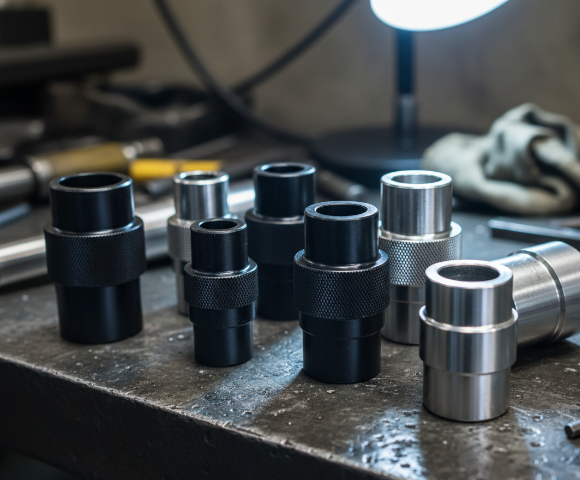
Advantages of CNC Machining O-Series Steel
| Advantage | Detailed Description | Key Benefit |
| Best Machinability | Easiest to cut among all tool steels in the annealed state. | Lowers manufacturing costs and lead times for complex parts. |
| Cost-Effective | Lower raw material cost than high-alloy A2 or D2 steels. | Economical choice for short-run production or disposable tooling. |
| Low Hardening Temp | Hardens at lower temperatures (~800°C) than other tool steels. | Reduces scale formation and risk of decarburization during heat treatment. |
| Good Wear Resistance | Achieves high hardness (up to 62 HRC). | Sufficient for cutting tools, drills, and forming dies in moderate use. |
| High Toughness | Better resistance to cracking than D2. | Good for tools subjected to shock or impact. |
Technical Parameters & Material Standards
We process the primary grades in the O-Series family:
| Grade Category | Specification | Characteristics & Ideal Uses |
| AISI O1 | General Purpose | Characteristics: The most popular grade. Contains Manganese, Chromium, and Tungsten. Excellent non-deforming characteristics for an oil-hardening steel. Deep hardening. Uses: Blanking dies, forming tools, gauges, bushings, wood cutting knives. |
| AISI O2 | Manganese Oil Hardening | Characteristics: Good machinability and safe hardening at low temperatures. Slightly less wear resistance than O1 but very reliable. Uses: Measuring tools, machine parts, light-duty shear blades. |
| AISI O6 | Graphitic Tool Steel | Characteristics: Contains free graphite which improves machinability (free-machining) and provides self-lubricating properties to the finished part. Uses: Wear plates, bushings, sliding machine ways, arbors. |
CNC Machining Guidelines for O-Series
- Distortion Control: Oil quenching cools the part unevenly compared to air. We recommend leaving 0.25mm - 0.40mm of grind stock on critical dimensions to correct warping.
- Decarburization: The surface can lose carbon during heat treatment if not protected. We recommend vacuum heating or wrapping parts in foil to maintain surface hardness.
- Machining Strategy: Aggressive roughing is possible. Finish machining should be done with sharp tools to avoid work hardening the surface before heat treat.
- Design: Avoid drastic changes in cross-section thickness to minimize quench cracking risks.
Application Scenarios
- Tooling & Fixtures: Drill bushings, locating pins, V-blocks, clamping jaws.
- Metal Stamping: Dies for low-to-medium production runs, forming punches.
- Cutting Tools: Woodworking knives, paper slitters, taps, reamers.
- Machine Parts: Cams, guides, ways, and wear strips requiring hardness.
- Gauges: Plug gauges, ring gauges, thread gauges (ground to size)
Physical Properties Table
Comparison: O1 vs A2 (Oil vs Air):
| Property | AISI O1 (Oil Hardened) | AISI A2 (Air Hardened) | Unit |
| Hardness (Typical) | 58 - 62 HRC | 57 - 62 HRC | Rockwell C |
| Machinability | Excellent (90%) | Good (65%) | (Ref: W1=100%) |
| Distortion in HT | Medium | Low | - |
| Wear Resistance | Medium | High | - |
| Toughness | Medium | High | - |
| Cost | Medium | High | - |

Request Your DFM & Quote – Upload Your Drawings
ㆍFill in your requirements and upload your 2D&3D file, we will feedback your project quotation and DFM within 24 hours.ㆍFile types: STEP, STP, IGES, IGS, SLDPRT, 3DM, SAT or X_T files File size: < 128 MB Part size: < 1500*1500*1500 mm
ㆍPrivacy: We respect your privacy. Here you can find an example of a non-disclosure agreement. By submitting this form, you agree to our terms & conditions and privacy policy.
ㆍPrivacy: We respect your privacy. Here you can find an example of a non-disclosure agreement. By submitting this form, you agree to our terms & conditions and privacy policy.