
Custom Hardware: Consumer Electronics Die Casting Solutions
Views: 1 Author: Allen Xiao Publish Time: 2026-06-15 Origin: Site


Designing next-generation virtual reality headsets or smart home hubs forces engineering teams into a brutal weight-saving corner. Sourcing teams frequently default to cheap injection-molded plastics, completely ignoring how flimsy polymer shells ruin the premium, high-end tactile feel consumers expect from flagship devices. Specifying advanced consumer electronics die casting solves this design dilemma completely.
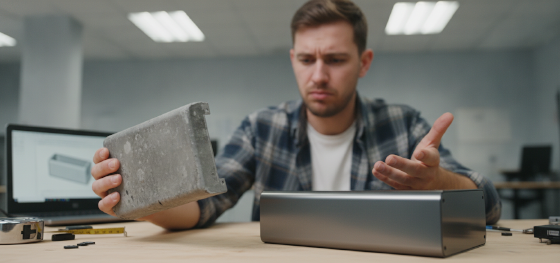
Rushing into mass production without analyzing the thermodynamic limits of thin-walled geometries is a dangerous financial gamble. Every single second your part spends cooling inside the press directly drives up your ongoing expenses. Deciding between different die casting applications wisely ensures your early-stage cash flow remains completely secure while protecting your product lifespans.
Consolidating your entire hardware pipeline inside our advanced precision manufacturing facility eliminates logistical delays and vendor finger-pointing. Let's dissect how magnesium and aluminum alloys secure robust, lightweight structures, analyze how to achieve flawless cosmetic finishes, and explore how rapid tooling accelerates your speed-to-market.
content:
Thin-Wall Challenges: Balancing Lightweight Performance and Premium Texture
Smart Hardware: Enclosures for Projectors, VR Headsets, and Smart Home Devices
Cosmetic Perfection: Microscopic Bead Blasting and Anodizing
Speed-to-Market: Leveraging Rapid Tooling for Consumer Electronics
FAQ: Honest Answers About Amortization and Steel Molds
Thin-Wall Challenges: Balancing Lightweight Performance and Premium Texture

Why do standard metal casting facilities struggle to produce ultra-thin tech enclosures?
Because standard alloys freeze rapidly when poured; without extreme injection speeds and precise thermal controls, the liquid metal blocks the channels, creating incomplete, defective parts.
Traditional structural parts require thick, heavy walls to support industrial loads. Consumer gadgets demand the exact opposite: paper-thin 1.0mm walls that remain structurally rigid while keeping the total weight of the device incredibly low.
Mastering these thin-wall boundaries requires specifying high-flow metals like zinc or magnesium. These advanced materials flow beautifully under high-pressure injection, allowing you to cast complex internal mounting ribs and cooling vents directly into the shell.
Smart Hardware: Enclosures for Projectors, VR Headsets, and Smart Home Devices
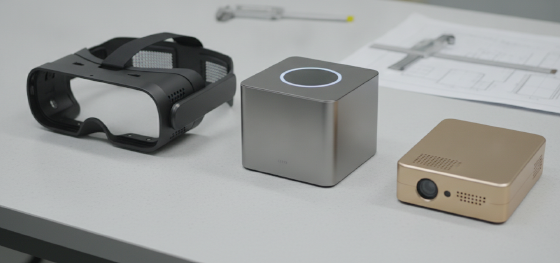
Which consumer products benefit the most from custom metal injection?
High-power projectors require massive heat dissipation, virtual reality headsets demand featherweight structural frames, and smart home hubs require sleek, non-magnetic cosmetic shells.
Slicing weight off a portable headset directly improves user comfort during extended wear. Utilizing custom consumer electronics die casting ensures the structural core remains perfectly rigid, protecting delicate optical lenses from shifting out of alignment during a fall.
Projector housings face severe thermal management challenges. The internal high-intensity lamps generate blistering heat, making conductive aluminum alloys mandatory to wick that destructive energy safely away without requiring noisy cooling fans.
Cosmetic Perfection: Microscopic Bead Blasting and Anodizing

How do premium hardware brands achieve that iconic, silky-smooth matte metallic texture?
By executing high-pressure bead blasting with microscopic glass spheres to erase ugly manufacturing lines, followed immediately by chemical anodizing to seal the metal.
Surface porosity remains the universal enemy of cosmetic electroplating and painting. Liquid Zamak alloys cure with an incredibly dense outer skin, providing the perfect non-porous canvas for brilliant, mirror-like chrome finishes.
Perfecting this premium aesthetic on cast aluminum requires specialized desmutting. Our automated finishing lines ensure your custom consumer electronics die casting parts receive a highly uniform, UV-resistant oxide coating that never chips or fades.
Speed-to-Market: Leveraging Rapid Tooling for Consumer Electronics
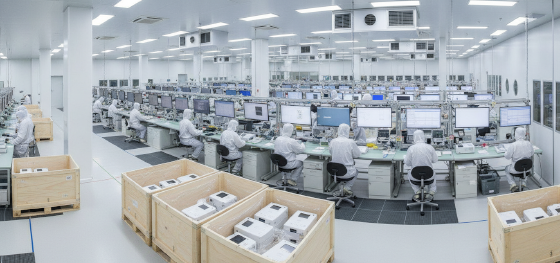
Comparing manufacturing methodologies based on your current engineering goals prevents massive budget overruns. The technical matrix below outlines how rapid tooling compares against traditional mass-production steel molds.
| Tooling Technology | Expected Tool Lifespan | Upfront Capital Investment |
|---|---|---|
| Standard Mass Production | 100,000+ Shots (Hardened H13 Steel) | Highest upfront NRE fee |
| JC Rapid Prototyping | 2,000 to 5,000 Shots (Modular Aluminum) | Cuts tooling bills by fifty percent |
Sourcing low-volume runs is perfect for tech startups trying to launch new electronic models quickly to beat competitors to market. We maintain a highly flexible, fully audited facility, allowing us to run short batches of 100 to 5,000 pieces with highly competitive tooling and piece pricing.
Stop paying outrageous unit prices for slow subtractive milling or high-NRE mold tooling. Send your complex CAD files to our engineering team today. We will run a complete, manual DFM flow analysis and deliver an extremely precise, guaranteed manual quote within twenty-four hours.
FAQ: Honest Answers About Amortization and Steel Molds

Does the complexity of the internal gating system increase my consumer electronics die casting cost?
Yes, complex runner channels consume more raw metal per shot. We design highly optimized gating paths to minimize excess scrap metal, keeping your material waste exceptionally low.
Can I run zinc and aluminum through the exact same steel mold?
No. Because different metals shrink and contract at completely different rates, pouring aluminum into a mold designed for zinc will result in parts that fail to meet your dimensional tolerances.
Do you charge extra fees for mandatory Material Test Reports?
Providing complete chemical certifications (CoA) and RoHS compliance certificates with every single delivery is our standard practice, included entirely free of charge.
How long does an expensive steel mold last when running aluminum?
Because aluminum melts at high temperatures, the **H13 tool steel** suffers from thermal fatigue, typically limiting the mold's reliable lifespan to roughly 100,000 shots.


ㆍPrivacy: We respect your privacy. Here you can find an example of a non-disclosure agreement. By submitting this form, you agree to our terms & conditions and privacy policy.