
How Can Advanced Die Casting Stop Internal Air Voids?
Views: 2 Author: Allen Xiao Publish Time: 2025-12-12 Origin: Site


Authorizing a hundred-thousand-dollar purchase order for hardened steel cavities terrifies inexperienced hardware procurement executives. Ordering massive blocks of custom-cut metal represents the absolute point of no return for ambitious global hardware launches. Discovering a fatal geometric flaw after the heavy tool completes its violent first shot paralyzes corporate cash flow instantly.

Executing high-volume production requires abandoning soft prototyping plastics and mastering brutal thermodynamic physics. Blasting molten Aluminum into a freezing steel cavity at terrifying speeds generates violent kinetic shockwaves. Relying on heavy die casting dictates that engineers must ruthlessly calculate precise gating locations and thermal cooling lines to prevent catastrophic internal metal fractures.
Managing exact dimensional tolerances separates amateur foundries from elite global manufacturing partners. Pushing super-heated liquid alloys into complex geometries naturally traps massive amounts of atmospheric oxygen deep inside the thickest metal sections. Ignoring this hidden chemical reality mathematically guarantees your expensive automotive fluid housings will violently leak during aggressive pressure testing.
Operating deep inside the Shenzhen precision manufacturing hub equips our veteran tooling directors to heavily protect your capital investment. We forcefully compel hardware designers to respect structural draft angles and uniform wall thicknesses before cutting any heavy P20 steel. Eradicating impossible undercuts prior to manufacturing ensures your expensive asset churns out flawless, retail-ready metallic components for decades.
content:
Executing Strict Porosity Elimination Protocols
Surviving Tooling Wash-Out Degradation
Deploying CNC Machining for Absolute Flatness
JUCHENG Hub: Dominating High-Pressure Sealing
Frequently Asked Questions: Thermodynamic Limits
Executing Strict Porosity Elimination Protocols
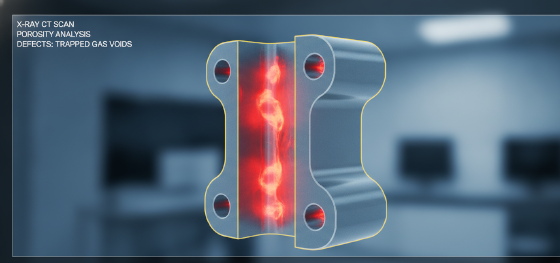
Does forcing liquid metal into a closed steel cavity naturally eliminate internal atmospheric air bubbles?
Absolutely not. Pushing molten material at terrifying speeds violently mixes ambient oxygen directly into the liquid flow, practically guaranteeing severe microscopic porosity unless the tool features highly specialized vacuum-assist blocks.
Implementing hardcore porosity elimination protocols aggressively dictates your ultimate hardware failure rate. Factory operators commonly refer to these trapped gas pockets as the silent killers of mass production. If a designer creates a thick, solid block of metal adjacent to a thin cooling fin, the thick section cools significantly slower, violently sucking liquid metal away from the center and leaving massive internal voids.
Mitigating this thermodynamic disaster requires engineering massive overflow wells entirely outside the primary part geometry. As the pressurized liquid blasts through the cavity, it aggressively pushes the contaminated, air-filled leading edge of the metal straight into these sacrificial pockets. Technicians simply snap these filled overflow wells off the final part, ensuring the actual usable component consists exclusively of dense, pristine metal.
Deploying vacuum-assisted technology entirely changes the fundamental physics of the shot cycle. Pulling an aggressive negative atmosphere inside the heavy steel cavity violently sucks out the trapped ambient air milliseconds before the liquid metal arrives. This highly expensive manufacturing upgrade remains absolutely mandatory for aerospace brackets that must physically survive brutal X-ray penetration inspections.
Surviving Tooling Wash-Out Degradation

Why do perfectly sharp steel molds slowly lose their precise dimensional accuracy over thousands of shots?
Continuous blasting of super-heated liquid alloys physically erodes the tight gating channels, literally washing away microscopic layers of the hardened steel over time, creating severe geometric flash on the finished parts.
Battling inevitable tooling wash-out degradation separates true industrial foundries from short-term amateur operations. Molten alloys flowing at supersonic speeds act exactly like a high-pressure sandblaster against the internal steel walls. If the tooling engineer selects a cheap base metal, the abrasive fluid dynamics will violently round off all your razor-sharp cosmetic corners within ten thousand cycles.
Securing profitable amortization schedules strictly demands purchasing premium H13 hardened steel capable of surviving immense thermal shock. Every time the freezing liquid metal slams into the cavity, the steel surface rapidly expands and contracts. This brutal, continuous cycling eventually causes microscopic spiderweb cracks to form across the polished tool face, completely ruining the retail appearance of your hardware.
Protecting the massive capital investment requires factory technicians to constantly halt production for meticulous mold maintenance. Operators must physically polish away the thermal fatigue cracks and heavily re-coat the internal cavity with specialized ceramic release agents. Failing to execute this preventative downtime guarantees the liquid aluminum will chemically solder itself directly to the bare steel, permanently destroying the expensive tool.
| Base Metal Alloy | Required Machine Type | Tooling Wear Factor | Optimal Industrial Application |
|---|---|---|---|
| Zinc (Zamak 3) | Hot Chamber (Submerged pump) | Very Low (Excellent tool life) | Intricate electrical housings and heavy gears |
| Aluminum (A380) | Cold Chamber (Robotic ladling) | High (Abrasive to steel tools) | Lightweight automotive engine chassis |
| Magnesium (AZ91D) | Hot or Cold Chamber | Moderate | Ultra-lightweight premium laptop shells |
| Heavy Brass Alloys | Cold Chamber | Extreme (Requires massive thermal cooling) | Corrosion-resistant marine plumbing valves |
Deploying CNC Machining for Absolute Flatness
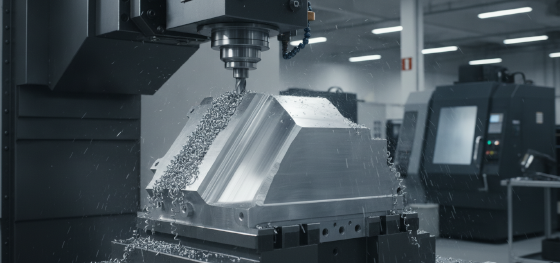
Can heavily molded components hold the exact same single-digit micron tolerances as pure milled billets?
Never. Natural thermal shrinkage during the violent cooling phase prevents absolute precision, practically forcing engineers to utilize secondary subtractive milling to finalize critical bearing press-fits perfectly.
Executing highly advanced hybrid manufacturing separates elite hardware programs from amateur assemblies. Engineers must fundamentally design aggressive draft angles into their CAD models to allow the hardened metal part to physically eject from the tool without violently scratching the steel. These sloping, angled walls completely prevent two mating parts from sitting perfectly flat against one another on the assembly line.
Once the rough metallic block completely cools, technicians aggressively clamp the part into a heavy 5-axis CNC Machining center. The spinning carbide endmill violently shears away the sloping draft angles, leaving an absolutely flawless, perfectly flat mounting face. This hybrid workflow guarantees incredible high-pressure fluid sealing while maintaining the massive unit cost reduction of high-volume metal pressing.
Blindly tapping tight machine threads directly into raw cast holes usually triggers immediate production disasters. The natural porosity hiding near the center of the part severely weakens the internal thread walls, causing standard steel bolts to strip the soft metal instantly. Programmers explicitly instruct the milling machine to drill completely fresh holes into the densest sections of the geometry before running the tapping cycle.
JUCHENG Hub: Dominating High-Pressure Sealing
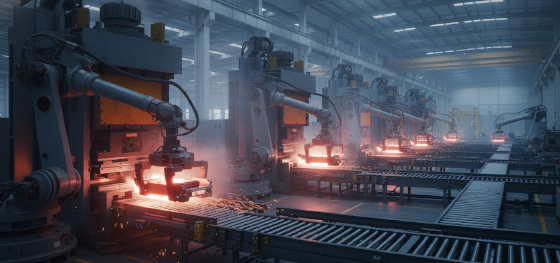
Why do elite hardware startups refuse to use cheap, disconnected foundries for heavy automotive components?
Because resolving catastrophic leakage failures requires immediate collaboration between the mold flow engineers pouring the metal and the precision machinists cutting the final sealing faces.
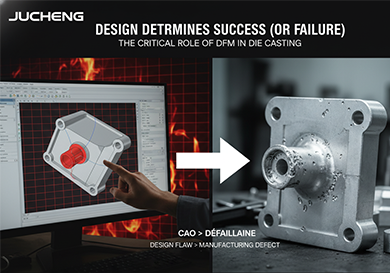
Partnering with Jucheng Precision resolves this toxic supply chain friction instantly. Evaluating your heavy die casting project triggers an immediate Design for Manufacturability (DFM) audit from our senior metallurgy team. We actively run highly advanced mold flow simulation software to perfectly map the fluid dynamics, identifying massive thermal bottlenecks before cutting any physical steel.
Owning massive internal subtractive capacities ensures we maintain absolute dimensional accountability throughout the entire production lifecycle. We seamlessly transition your rough metallic parts into our automated milling division and finalize them with premium Surface Finishing lines. Guaranteeing your massive global launch scales flawlessly remains our absolute top engineering priority.
Frequently Asked Questions: Thermodynamic Limits
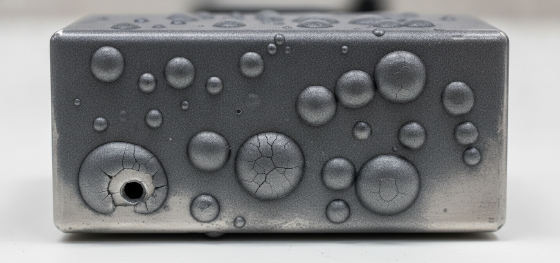
Can I safely apply premium Type III hard anodizing to cast aluminum parts?
Usually no. High-volume aluminum casting requires heavy amounts of silicon mixed into the alloy to improve liquid flow dynamics. This high silicon content severely interferes with the chemical oxidation process, turning the final cosmetic finish into a muddy, dark grey, highly inconsistent disaster.
Why do cast metal enclosures sometimes blister violently during powder coating bake cycles?
Powder coating requires baking the metal component inside a highly heated industrial oven. If the part contains hidden internal porosity, the trapped atmospheric gases violently expand under the intense heat, physically pushing through the soft, curing powder layer and creating massive, ugly surface blisters.
Is it possible to heat-treat standard cast components to massively increase their yield strength?
It remains incredibly dangerous unless manufactured using strict high-vacuum technology. Subjecting standard porous components to extreme thermal heat-treating cycles causes the trapped internal gases to expand violently, physically warping the entire geometric dimensions out of tolerance and ruining the part permanently.

ㆍPrivacy: We respect your privacy. Here you can find an example of a non-disclosure agreement. By submitting this form, you agree to our terms & conditions and privacy policy.