
Industrial Metal for Stamping Selection for Automotive
Views: 3 Author: Allen Xiao Publish Time: 2025-07-22 Origin: Site


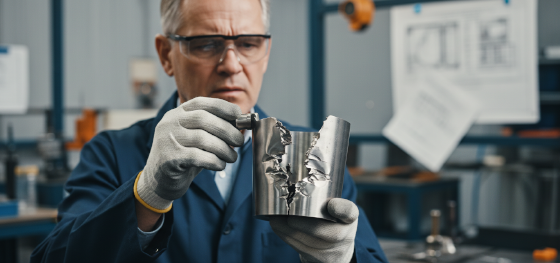
Choosing the wrong metal for stamping instantly destroys million-dollar hard tooling. Crushing a thick alloy sheet between heavy steel plates generates terrifying kinetic energy that cannot be ignored. Failing to calculate exact material elongation properties before running the press guarantees your entire production batch will suffer catastrophic physical tearing.
Procurement executives frequently underestimate the raw physics required to permanently bend rigid sheets into complex functional geometries. Executing high-volume manufacturing requires masterfully balancing raw material cost against brutal progressive tool wear. Selecting an overly abrasive alloy severely damages your delicate punch matrix, bringing the entire assembly line to a grinding halt.
Managing severe progressive die amortization dictates your ultimate hardware financial survival. Spending eighty thousand dollars on a complex interlocking steel tool absolutely demands using an alloy that flows seamlessly under massive pressure. Specifying cheap, highly stressed base metals simply to save a few pennies per kilogram is financial suicide for hardware startups.
Operating deep inside the Shenzhen precision manufacturing hub equips our veteran engineers with absolute metallurgical authority. We forcefully compel hardware designers to respect structural elongation limits before cutting any expensive P20 steel. Interrogating the physical chemistry of the raw coil completely neutralizes terrifying factory disasters before the machinery ever powers on.
content:
Conquering Aggressive Springback Compensation
Surviving Violent Yield Strength Failure
Defeating Friction and Severe Tool Galling
JUCHENG Hub: Dominating Heavy Press Operations
Frequently Asked Questions: Sheet Metal Physics
Conquering Aggressive Springback Compensation
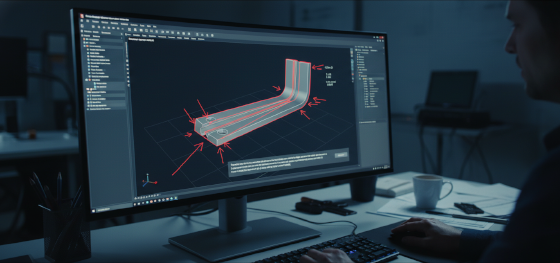
Does a permanently bent piece of sheet metal naturally stay exactly where the machine pressed it?
Rarely. Bending stiff alloys induces massive internal kinetic tension, causing the metal flange to physically bounce back slightly once the heavy press releases its clamping pressure.
Defeating this highly destructive physical memory requires intense springback compensation algorithms. Toolmakers must deliberately over-bend the raw material by a few precise degrees during the actual stroke. Releasing the hydraulic pressure allows the metal to naturally relax exactly into the perfect ninety-degree dimensional tolerance required by the blueprint.
Specifying high-carbon stainless steel dramatically magnifies this terrifying geometric bounce. Harder materials fight the forming die aggressively, making it incredibly difficult to achieve tight angular precision across massive production runs. Engineers must meticulously test different coil tempers to find the exact sweet spot between structural rigidity and predictable bending behavior.
Designing complex interlocking automotive chassis parts demands absolute mathematical control over this phenomenon. If the metal bounces back just half a degree out of specification, the entire automated robotic welding line will violently fail to align the mating components. Catching this dimensional drift requires fully automated laser inspection stations positioned directly after the pressing operation.
Surviving Violent Yield Strength Failure
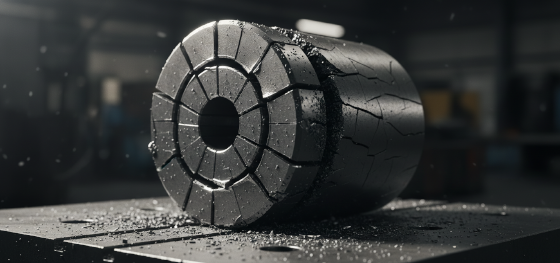
Will increasing hydraulic tonnage magically force a brittle metal to stretch into a complex deep shape?
Absolutely not. Pushing an alloy past its ultimate physical limit simply causes violent tearing and fracturing, completely ruining the part and potentially shattering the expensive punch die entirely.
Experiencing yield strength failure on the factory floor stops assembly lines instantly. Forcing a flat metallic blank into a massive cylindrical cup requires the internal molecules to physically stretch and slide seamlessly. Selecting a metal for stamping that lacks proper elongation properties simply results in blown-out bottoms and severely jagged, razor-sharp edges.
Evaluating specific metallurgical data prevents these violent manufacturing disasters entirely. Engineers must actively scrutinize the exact tensile limits and elongation percentages before finalizing the structural design. Utilizing softer aluminum alloy grades inherently allows for much deeper drawing operations, but heavily sacrifices the ultimate impact resistance of the final enclosure.
| Sheet Metal Alloy Grade | Elongation & Formability | Tooling Wear Factor | Ideal Factory Application |
|---|---|---|---|
| Cold Rolled Steel (SPCC) | Excellent (High stretch) | Moderate (Industry baseline) | Automotive body panels and heavy brackets |
| Aluminum Alloy 5052 | Good (Prone to tearing if pushed) | Low (Gentle on steel punches) | Lightweight electronics enclosures |
| Stainless Steel 304 | Moderate (Requires massive tonnage) | Severe (Causes heavy die friction) | Medical trays and corrosive environments |
| Phosphor Bronze | Excellent (Perfect for tight bends) | Low | Complex electrical battery contacts |
Defeating Friction and Severe Tool Galling

Why do perfectly smooth metallic parts suddenly emerge from the machine covered in deep, ugly scratches?
Extreme kinetic friction causes microscopic particles of the sheet metal to literally cold-weld themselves onto the steel tool, heavily gouging every subsequent part that passes through the press.
Preventing severe tool galling demands highly specialized industrial lubrication and flawless metal for stamping selection. Deep drawing operations generate massive localized thermal heat as the molecules violently shift. Flooding the pressing zone with heavy synthetic stamping fluids prevents the soft metal from violently fusing to the hardened steel punch.
Slashing unpredictable manual labor costs requires parts to drop out of the machine completely flawless. Relying on tedious secondary manual polishing to desperately fix galled, scratched surfaces instantly destroys your operational profit margin. Toolmakers must highly polish the internal die surfaces to a flawless mirror finish to guarantee material flows without dragging.
Selecting pre-lubricated or specifically coated metal coils prevents this dangerous friction from initiating. Zinc-galvanized sheets naturally provide a microscopic layer of lubricity that actively protects the tooling matrix. Procurement teams must calculate the slightly higher cost of coated coils directly against the massive savings generated by eliminating tooling maintenance shutdowns.
JUCHENG Hub: Dominating Heavy Press Operations
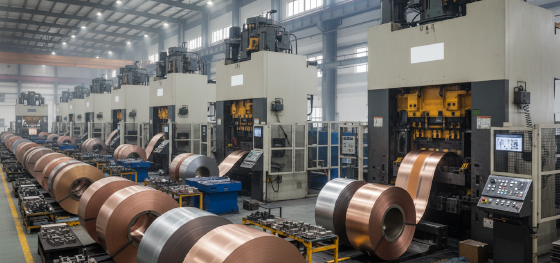
Why do aggressive hardware startups prefer vertically integrated factories for heavy metal forming?
Because resolving complex metallurgical tearing issues requires immediate, localized collaboration between the tooling engineers cutting the steel dies and the press operators physically running the coils.
Partnering with highly experienced veterans prevents massive tooling budgets from vaporizing overnight. Jucheng Precision executes uncompromising Design for Manufacturability (DFM) audits instantly upon receiving your digital CAD files. We aggressively identify impossible corner radii and dangerous draw depths that mathematically guarantee yield strength failure.
Running fully automated progressive stamping lines allows our facility to produce millions of flawless metallic components rapidly. Protecting your progressive die amortization remains our absolute top priority. We refuse to feed inappropriate, abrasive raw materials into our high-speed presses, guaranteeing your global supply chain runs continuously without terrifying dimension failures.
Frequently Asked Questions: Sheet Metal Physics

Can precise thermal heat treatment reverse the dangerous hardening caused by heavy mechanical forming?
Yes. Violently bending metal causes severe work-hardening, making the localized area incredibly brittle. Utilizing specialized industrial annealing ovens safely relaxes the internal crystalline structure, restoring vital flexibility before executing further deep forming operations.
Does designing a larger internal bend radius physically prevent the raw sheet metal from cracking?
Absolutely. Forcing thick alloy plates into infinitely sharp ninety-degree corners aggressively stretches the outer edge of the metal beyond its physical tearing point. Increasing the bend radius distributes the extreme mechanical tension across a much wider surface area, safely preventing surface fractures.
Why does the grain direction of the raw metal coil matter during the forming process?
Rolling metal coils at the mill aligns the internal crystalline molecules perfectly into long, continuous directional grains. Bending the metal perfectly parallel to these long grains acts exactly like splitting firewood, practically guaranteeing the structural flange will snap cleanly in half under pressure.



ㆍPrivacy: We respect your privacy. Here you can find an example of a non-disclosure agreement. By submitting this form, you agree to our terms & conditions and privacy policy.