
Paint Sprayer Operations: Defeating Prototype Adhesion Failure
Views: 1 Author: Allen Xiao Publish Time: 2025-09-11 Origin: Site


Delivering a heavily engineered prototype that looks like a cheap, spray-painted toy destroys corporate investor confidence instantly. Hardware procurement executives absolutely despise unboxing a million-dollar design concept only to find bubbling, uneven color coats flaking off the edges. Operating a professional industrial paint sprayer requires significantly more chemical expertise than simply pulling a mechanical trigger inside a dirty factory garage.
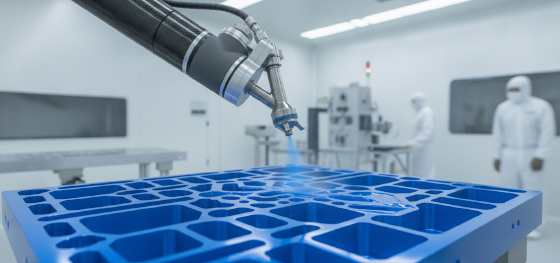
Preventing catastrophic adhesion failure testing disasters demands aggressive surface preparation long before the first drop of color ever hits the metal. Raw CNC Machining components naturally retain microscopic pools of slick cutting fluids and heavy industrial coolants. Spraying expensive liquid pigments directly over these invisible chemical contaminants mathematically guarantees the dried crust will violently peel off during routine physical handling.
Upgrading your finishing workflow to include automated electrostatic coating physically transforms exactly how liquid bonds to the substrate. Factory technicians heavily charge the atomized droplets electrically, forcing them to magnetically wrap around complex conductive Aluminum and heavy Steel geometries. This violent magnetic attraction completely eliminates wasteful overspray and ensures absolutely uniform aesthetic thickness across deep internal cavities.
Nestled deeply within the Shenzhen precision manufacturing hub, our veteran surface finishing team strictly controls dangerous atmospheric variables. We deliver premium retail aesthetics by confining all wet operations exclusively inside heavily filtered, pressurized clean rooms. Eliminating rogue dust particles from the wet environment ensures your final hardware assembly directly rivals the flawless visual perfection of top-tier consumer electronics.
content:
Defeating Severe Adhesion Failure on Plastics
Executing Automated Electrostatic Coating
Achieving Premium Retail Aesthetics Consistently
JUCHENG Hub: Dominating Dust-Free Environments
Frequently Asked Questions: Finishing Physics
Defeating Severe Adhesion Failure on Plastics
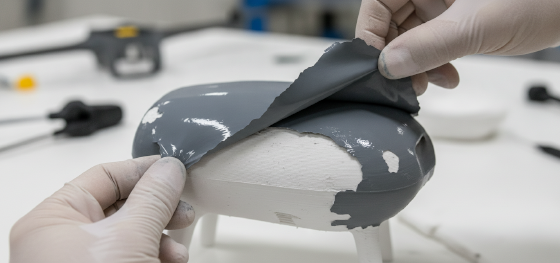
Does industrial paint naturally bond permanently to raw extruded polymer prototypes?
No. Layered plastics possess highly porous, uneven surfaces that actively trap microscopic air bubbles, physically preventing smooth chemical bonding and causing severe flaking.
Prepping complex organic geometries for wet finishing dictates brutal manual labor on the factory floor. Technicians must aggressively deploy abrasive Sandblasting protocols to physically knock down the rigid stepping lines inherent in raw 3D Printing processes. Failing to flatten the underlying substrate simply magnifies the ugly mechanical defects once the glossy topcoat cures.
Smoothing the substrate completely requires heavily applying high-build automotive primers before utilizing the actual paint sprayer. This thick intermediary chemical actively fills the microscopic valleys and deep gouges left behind by the initial extrusion nozzle. The primer essentially acts as a highly adhesive chemical bridge between the slippery plastic and the final color layer.
Sanding this cured primer back down to a perfectly flat, glass-like finish demands extreme human precision. Operators gently wet-sand the coated ABS enclosures by hand, carefully avoiding burning violently through the delicate exterior corners. Skipping this grueling foundational step guarantees a horrific cosmetic outcome that sophisticated hardware investors will instantly reject.
Executing Automated Electrostatic Coating
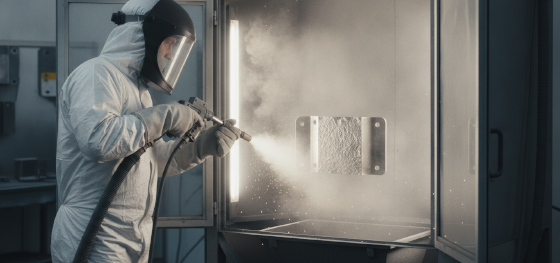
Why do large factories aggressively refuse to use traditional compressed air spray guns for high-volume metal production?
Traditional pneumatic guns blow massive amounts of expensive liquid pigment randomly into the atmosphere, violently wasting roughly sixty percent of the raw chemical material as useless, toxic overspray.
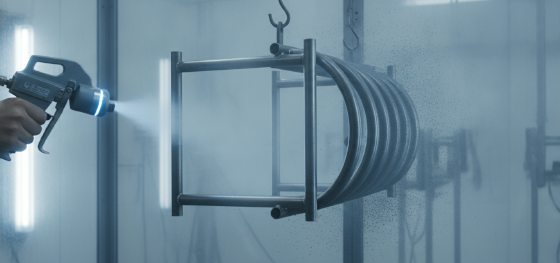
Deploying advanced electrostatic technologies fundamentally changes the financial trajectory of high-volume hardware finishing. Pumping a massive negative electrical charge directly into the liquid pigment forces the atomized particles to actively seek out the grounded metal target. The paint literally acts like a magnet, aggressively flying toward the raw substrate with terrifying precision.
Experiencing this unique magnetic wrap-around effect completely eliminates tedious manual touch-ups. The highly charged droplets literally pull themselves around the backside of complex tubular Stainless Steel chassis frames, coating impossible blind spots absolutely automatically. This physical phenomenon heavily slashes the unpredictable human labor previously required to rotate heavy parts manually.
Achieving strict mil-spec thickness requirements becomes completely standardized under robotic control. The automated system strictly regulates the exact fluid delivery rate, mathematically preventing heavy, sagging drips that instantly ruin tight mechanical assembly tolerances. Procurement executives accurately calculate exactly how many milliliters of expensive custom pigment the factory will consume per thousand units.
| Surface Preparation Method | Base Material Substrate | Chemical Adhesion Risk | Optimal Factory Application |
|---|---|---|---|
| Chemical Etching & Primer | Extruded Polymers | High (Requires intense manual sanding) | High-end consumer electronic mockups |
| Ultrasonic Degreasing | Machined Solid Aluminum | Low (Clean surface bonds instantly) | Premium automotive dashboard bezels |
| Abrasive Bead Blasting | Heavy Machined Steel | Very Low (Excellent mechanical grip) | Industrial robotic chassis frames |
| Flame Treatment Pass | Polypropylene (PP) | Extreme (Material naturally repels liquids) | Chemical-resistant medical casings |
Achieving Premium Retail Aesthetics Consistently
Can a factory perfectly match a highly specific corporate Pantone color code using off-the-shelf aerosol cans?
Never. Achieving absolute brand accuracy requires a dedicated chemical laboratory actively mixing concentrated raw pigments, heavy binders, and specialized flattening agents completely from scratch.
Replicating the exact tactile feel of premium consumer electronics requires intense chemical mastery. Clients frequently demand a velvety, soft-touch matte finish on their rigid Polycarbonate medical handles. Formulating these highly specialized two-part polyurethane coatings introduces terrifying operational time limits on the busy production floor.
Once the technician physically mixes the heavy chemical hardener into the base liquid resin, the paint sprayer must forcefully expel the entire batch before the liquid violently cures solid inside the delicate fluid lines. Pausing the line for even twenty minutes chemically destroys the expensive equipment, forcing a massive, costly teardown of the entire pressurized system.
Executing multi-color cosmetic masking separates amateur operations from elite industrial fabricators. Applying custom high-temperature vinyl tapes perfectly along complex geometric curves requires steady, highly experienced human hands. Tearing the masking tape off too late physically rips the jagged, dried edge of the adjacent color block, instantly ruining hours of meticulous preparation work.
JUCHENG Hub: Dominating Dust-Free Environments
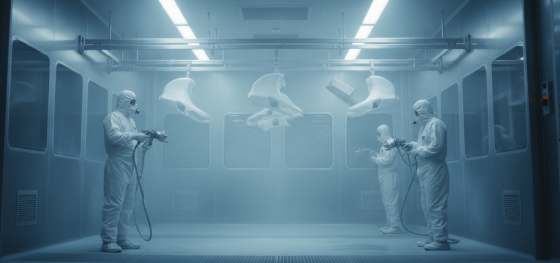
Why do freshly coated cosmetic prototypes frequently emerge from the baking oven covered in tiny, ugly bumps?
Rogue atmospheric dust violently lands on the wet, sticky substrate before it fully cures, permanently embedding microscopic garbage directly into the premium high-gloss clear coat.
Eradicating microscopic atmospheric contamination forces elite facilities to construct heavily pressurized clean rooms. Pumping massively filtered air into the enclosed wet bay creates a positive pressure environment that physically blows invasive dust away from the active work zone. We actively protect your expensive prototypes from devastating outdoor factory pollutants.
Partnering directly with Jucheng Precision guarantees your sensitive cosmetic projects survive this dangerous finishing phase. We seamlessly transition your raw Injection Molding components directly into our controlled chemical bays without ever risking outdoor shipping contamination. Centralizing your entire hardware supply chain protects your venture capital investment entirely.
Frequently Asked Questions: Finishing Physics
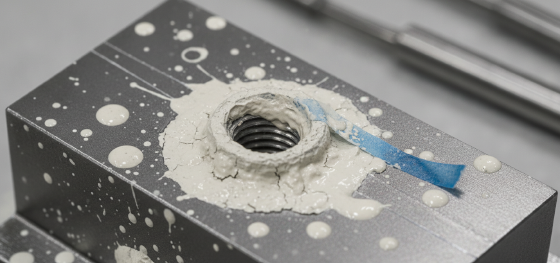
Does applying multiple thick layers of color negatively impact precision bearing press-fits?
Absolutely. Liquid coatings naturally add physical microscopic thickness to the raw geometry. Engineers must deliberately oversize threaded holes during the initial milling phase to mathematically accommodate this inevitable chemical buildup, otherwise the bolts will violently seize during assembly.
Why do specialized soft-touch matte coatings physically degrade and become sticky after several years?
Prolonged exposure to ultraviolet sunlight and highly acidic human sweat actively breaks down the fragile chemical binders holding the soft rubberized finish together. Applying specialized UV-resistant clear coats heavily mitigates this terrible, sticky degradation on handheld devices.
Can technicians successfully apply wet liquid coatings over raw, untreated silicone parts?
It remains chemically impossible. Soft elastomers inherently repel standard industrial paints, causing the liquid to bead up and roll off instantly. Coloring flexible rubber absolutely requires injecting highly concentrated liquid dyes directly into the raw vat before the vacuum casting process ever begins.

ㆍPrivacy: We respect your privacy. Here you can find an example of a non-disclosure agreement. By submitting this form, you agree to our terms & conditions and privacy policy.