
Types of Rapid Prototyping: Defeating Anisotropic Weakness
Views: 1 Author: Allen Xiao Publish Time: 2025-12-17 Origin: Site


Selecting inappropriate manufacturing technologies during early product development routinely destroys venture-backed hardware startups. Engineering teams frequently print fragile, visually appealing plastic models, mistakenly believing these brittle shells accurately represent final production geometry. Subjecting these weak approximations to rigorous kinetic drop tests generates terrifyingly false physical data, mathematically guaranteeing your final steel molds will fail.

Procurement managers must ruthlessly evaluate multiple distinct types of rapid prototyping to secure legitimate mechanical validation. Slapping a cheap extruded polymer bracket onto a vibrating automotive chassis simply creates a ticking time bomb. Surviving brutal industrial environments dictates aggressively matching your exact physical testing requirements directly against the thermodynamic capabilities of the chosen fabrication method.
Navigating the terrifying gap between single visual mockups and ten thousand mass-produced units requires intense hybrid manufacturing strategies. Elite mechanical designers rarely rely on a single process, actively blending additive printing, subtractive milling, and soft tooling pours to slash development timelines. Understanding exactly when to abandon layered plastics for solid metal billets actively protects your corporate treasury from hemorrhaging cash.
Operating deep inside the Shenzhen precision manufacturing hub equips Jucheng Precision to completely eliminate this dangerous guesswork. We heavily audit your digital CAD files to deploy the absolute perfect 3D Printing or milling technology necessary for your specific testing phase. Eliminating scattered local vendors ensures your critical dimension tolerances remain perfectly intact across your entire product scaling journey.
content:
Exposing Additive Anisotropic Material Weakness
Deploying Subtractive CNC for Monolithic Strength
Mastering Low-Volume Functional Beta Validation
JUCHENG Hub: Dominating Bridge Tooling Transitions
Frequently Asked Questions: Hardware Scaling
Exposing Additive Anisotropic Material Weakness
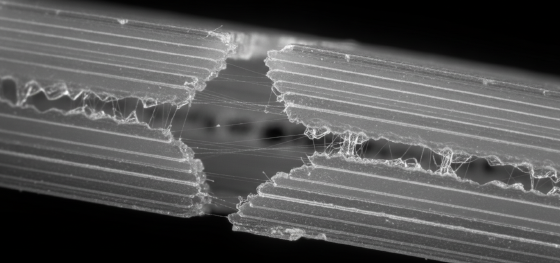
Will an extruded plastic prototype handle extreme mechanical flexing just like a mass-produced injection molded part?
Never. Extruded filaments fundamentally suffer from severe anisotropic material weakness, meaning the fragile thermal bonds hiding between the printed layers will violently split apart under lateral stress long before the base polymer actually yields.
Evaluating different types of rapid prototyping demands confronting the terrifying physical reality of layer delamination. Engineers attempting to test heavy snapping clips or interlocking mechanical living hinges using standard FDM extrusion usually watch their designs shatter instantly in their hands. Relying on this false negative data heavily misguides the design team into needlessly over-thickening geometries, completely ruining the aesthetic product profile.
Upgrading to advanced powder bed fusion systems heavily mitigates this structural nightmare. Lasers actively sinter nylon dust together so intensely that the resulting component achieves nearly perfect isotropic density. These industrial additive systems physically eliminate the brittle Z-axis weakness, delivering highly durable complex geometries that effortlessly survive brutal impact drop testing without requiring expensive cutting tools.
Securing high-resolution visual models for investor boardroom pitches dictates utilizing SLA (Stereolithography) liquid resin machines. Resins cure into incredibly smooth, retail-ready surfaces perfect for analyzing aesthetic ergonomics. However, these specific chemical compounds remain notoriously brittle and highly sensitive to ambient ultraviolet light, violently degrading into fragile glass if left exposed to the summer sun.
Deploying Subtractive CNC for Monolithic Strength

Must engineers physically mill heavy metal to secure legitimate testing data for load-bearing brackets?
Absolutely. Subtractive milling violent carves the geometry directly out of heavily compressed, stress-relieved solid billets, delivering the absolute monolithic crystalline density required to simulate real-world kinetic crashes.
Transitioning away from fragile printed plastics toward heavy CNC Machining represents a massive maturity milestone for hardware startups. Pushing superheated pneumatic air through a porous, printed fluid manifold practically guarantees immediate catastrophic leakage. Milling that exact same internal geometry into a solid block of extruded Polycarbonate guarantees flawless, watertight sealing capable of holding hundreds of PSI.
Fastening complex components together relies entirely on robust thread integrity. Driving stainless steel bolts into layered additive plastics violently shreds the internal walls. Solid machined polymers like ABS seamlessly accept ultrasonic heated brass inserts, providing indestructible machine threads for continuous battery compartment removals during aggressive field evaluations.
| Manufacturing Technology | Mechanical Strength Profile | Primary Engineering Limitation | Optimal Factory Application |
|---|---|---|---|
| Thermoplastic Extrusion | Poor (Splits along layer lines) | Severe geometric warping | Early ergonomic size evaluations |
| Liquid SLA Resin Curing | Brittle (Shatters under impact) | Rapid UV chemical degradation | High-fidelity aesthetic mockups |
| 5-Axis Subtractive Milling | Absolute Maximum Monolithic | Cannot carve impossible internal voids | High-pressure pneumatic fluid valves |
| Soft Sheet Metal Fabrication | Extreme Yield Strength | Expensive upfront setup costs | Heavy structural robotic chassis frames |
Mastering Low-Volume Functional Beta Validation

Is purchasing a hardened steel injection mold the only financial way to secure one hundred identical testing units?
No. Pouring highly reactive liquid polyurethane resins into soft silicone cavities effortlessly delivers hundreds of physically authentic, retail-ready components without paralyzing your corporate cash flow.
Executing legitimate functional beta validation requires putting authentic hardware directly into the hands of real-world end users. Sending out fragile printed plastics instantly destroys the perceived value of your high-end consumer electronics. Vacuum Casting bridges this terrifying gap, producing flawlessly smooth enclosures that perfectly mimic the weight and flex of mass-produced plastics.
Matching strict corporate branding dictates injecting highly concentrated liquid dyes directly into the casting vat. Painting basic printed parts often results in catastrophic chipping during heavy mechanical testing. Solid cast colors penetrate the entire wall thickness completely, ensuring aggressive deep scratches remain entirely invisible to your critical investor board.
JUCHENG Hub: Dominating Bridge Tooling Transitions

Why do hardware teams experience catastrophic failures when moving from scattered local print shops to mass manufacturing?
Because splitting the development liability between disconnected vendors destroys dimensional accountability. The high-volume factory has absolutely zero historical context regarding why specific tolerances were established during the additive phase.
Partnering exclusively with Jucheng Precision guarantees a flawless bridge tooling transition. Operating our massive Shenzhen hybrid facility ensures we completely control your product lifecycle from the first visual print straight through to heavy Injection Molding. We aggressively calculate exact material shrinkage parameters internally, protecting your tight launch deadlines.
Submitting your digital CAD file triggers an immediate, hardcore Design for Manufacturability (DFM) audit. We actively identify impossible geometric undercuts and specify the absolute perfect types of rapid prototyping required for your exact testing phase. We refuse to burn your venture capital budget on physically inappropriate manufacturing methods.
Frequently Asked Questions: Hardware Scaling

Does testing multiple iterations simultaneously drastically reduce the overall launch timeline?
Absolutely. Smart procurement managers utilize our hybrid facility to produce three slightly different geometric variations in parallel. Field-testing multiple designs over the exact same weekend heavily compresses the engineering feedback loop, slicing weeks off the final schedule.
Can a highly detailed resin print accurately predict how a final injection molded part will warp?
No, the thermodynamic physics remain entirely different. Layered resin cures incrementally, whereas molten plastics cool simultaneously inside a highly pressurized steel cavity. Predicting true injection warpage absolutely requires specialized mold flow analysis software.
Why do elite engineers often design parts combining both additive and subtractive methods?
Printing massive complex aerospace blocks saves huge material costs, but additive cannot hold tight bearing tolerances. Engineers print the raw shape oversized, then mount it inside a heavy CNC mill to subtractively carve the critical mating faces to absolute perfection.


ㆍPrivacy: We respect your privacy. Here you can find an example of a non-disclosure agreement. By submitting this form, you agree to our terms & conditions and privacy policy.