
How Can a Prototype Plastic Part Prevent Hard Tooling Disasters?
Views: 5 Author: Allen Xiao Publish Time: 2025-11-06 Origin: Site


Evaluating physical hardware concepts frequently traps venture-backed startups in a dangerous cycle of false positive data. Relying on brittle desktop extrusion systems to produce a functional prototype plastic part guarantees catastrophic failure during rigorous mechanical testing. Procuring components that perfectly mirror the ultimate end-use material behavior dictates whether your engineering team successfully launches a product or endlessly burns investor capital on broken iterations.
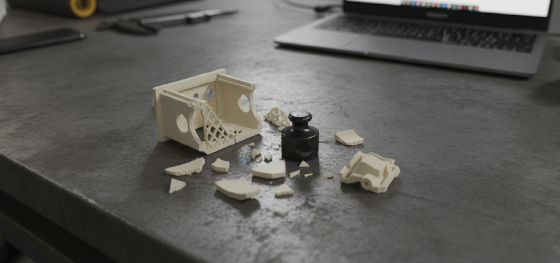
Mastering aggressive snap-fit joint validation separates elite mechanical engineers from amateur designers. Forcing a rigid 3D Printing resin clip into a tight receiving slot inevitably violently shatters the fragile material, completely invalidating hours of expensive CAD development. Hardware procurement managers must aggressively demand physically robust materials that stretch and flex identically to mass-produced industrial pellets.
Executing flawless thermoplastic material mimicry completely bridges this terrifying gap between digital concepts and physical volume manufacturing. Replacing porous layered printing with advanced CNC Machining or liquid pouring unlocks authentic physical performance. Engineers practically eliminate downstream assembly nightmares by executing rigorous pre-production dimensional verification before ever authorizing a fifty-thousand-dollar steel mold.
Operating deep within the Shenzhen precision manufacturing hub equips Jucheng Precision veterans to actively rescue doomed hardware projects. We aggressively steer clients away from inappropriate rapid technologies that mathematically cannot survive drop testing. Delivering retail-ready functional models ensures your corporate testing phase yields absolute, undeniable mechanical truth without exposing your intellectual property to disjointed supply chains.
content:
Defeating Snap-Fit Validation Failures
Mastering Thermoplastic Material Mimicry
Executing Pre-Production Dimensional Verification
JUCHENG Hub: Dominating Hardware Scaling
Frequently Asked Questions: Polymer Physics
Defeating Snap-Fit Validation Failures
Can hardware engineers rely on standard photopolymer resins to test aggressive mechanical flexing?
Never. Photopolymer resins remain notoriously brittle and possess virtually zero elongation at break, causing flexible retaining clips to violently snap off the moment kinetic stress is applied.
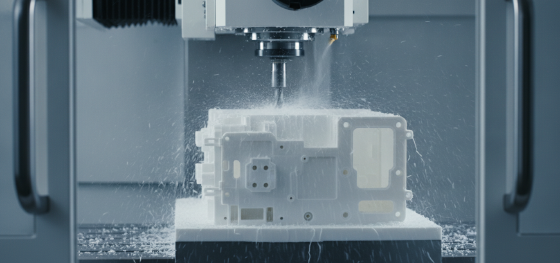
Gathering legitimate mechanical testing data physically demands carving your prototype plastic part directly out of solid extruded billets. Subtractive milling heavily compressed ABS or incredibly tough POM (Delrin) delivers absolute monolithic density. This raw crystalline structure perfectly absorbs kinetic shock, allowing mechanical clips to flex, bend, and securely lock into place exactly like a final mass-produced enclosure.
Designing complex interlocking assemblies requires ruthless iteration to nail the exact insertion force. If a sliding rail design feels too stiff during initial testing, software algorithms cannot accurately predict the physical friction coefficient. Machinists physically tweak the toolpaths by mere microns on the CNC machine, continuously testing the actual sliding friction until the ergonomic feel is absolutely perfect.
Fastening heavy internal components forces engineers to abandon weak layered plastics completely. Driving stainless steel bolts into porous printed walls violently shreds the internal geometry, causing instant thread failure. Solid machined polyamides boast immense sheer strength, seamlessly accepting ultrasonic heated brass inserts to provide permanent, indestructible machine threads for continuous battery compartment removals.
Mastering Thermoplastic Material Mimicry
Does low-volume liquid casting accurately simulate the performance of heavy engineering plastics?
Absolutely. Modern chemical formulations aggressively mimic the exact physical properties of high-end thermoplastics, offering V0 flame retardancy, intense UV stability, and extreme structural rigidity.
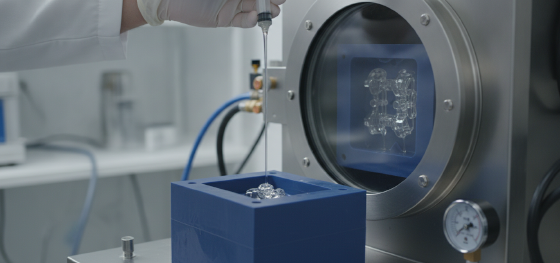
Bridging the massive financial gap between single visual models and expensive Injection Molding runs requires deploying agile Vacuum Casting technology. Pouring highly reactive liquid polyurethane into soft silicone cavities allows factories to rapidly produce fifty identical beta units. Adjusting the chemical mixture directly inside the vat brilliant simulates rigid Polycarbonate (PC) or soft elastomeric rubber effortlessly.
Matching exact corporate Pantone branding colors prevents massive headaches during investor presentations. Applying thick spray paint to flexible components usually results in catastrophic chipping and peeling under heavy handling. Injecting highly concentrated liquid dyes directly into the casting resin guarantees the vibrant color penetrates the entire solid wall thickness, rendering deep mechanical scratches practically invisible.
Executing complex two-shot overmolding becomes remarkably affordable using this agile chemical process. Technicians easily suspend a rigid machined plastic chassis back into the soft silicone cavity. Pouring a flexible rubber-like resin entirely around the rigid skeleton flawlessly simulates expensive dual-injection tooling, delivering premium tactile ergonomics for handheld medical devices without incurring massive capital expenditures.
| Prototyping Technology | Mechanical Flexing & Elongation | Cosmetic Surface Finish | Optimal Testing Application |
|---|---|---|---|
| Basic SLA Resin Printing | Extremely Poor (Shatters instantly) | Excellent (Requires painting) | Non-functional visual marketing mockups |
| Polyurethane Liquid Casting | High (Mimics injection molded ABS) | Flawless retail-ready texture | Low-volume beta testing and field trials |
| Subtractive 5-Axis Milling | Absolute Maximum (Solid Extruded Billet) | Machined finish (Can be vapor polished) | High-pressure pneumatic fluid manifolds |
| SLS Nylon Powder Sintering | Moderate (Excellent impact resistance) | Porous and slightly rough | Complex interlocking robotic drone gears |
Executing Pre-Production Dimensional Verification

Should hardware startups order hardened steel molds immediately after approving a printed visual model?
Never. Additive physics differ entirely from high-pressure molten injection physics, practically guaranteeing your expensive steel tool will require massive, costly modifications to correct unexpected warpage.
Ordering a fully functional prototype plastic part explicitly forces the engineering team to confirm absolute design tolerances physically. Shrinkage rates vary wildly across different manufacturing disciplines. Validating the exact O-ring groove depth using a machined PEEK prototype perfectly ensures the final waterproof seal actually holds fifty PSI of hydraulic pressure before cutting any heavy tool steel.
Uncovering severe draft angle errors during the physical validation phase saves venture-backed companies millions in scrap rates. Modeling vertical plastic walls with zero-degree draft guarantees the hardened polymer will permanently shrink and seize onto the steel core during volume manufacturing. Veteran technicians physically review these critical draft angles on the machined model, highlighting impossible geometries instantly.
Running pilot assembly procedures completely dictates exactly how your final factory line will perform. Assembly workers physically practice routing delicate internal wiring harnesses and driving self-tapping screws into the authentic plastic enclosures. Identifying severe ergonomic bottlenecks early ensures your global product launch scales flawlessly without inducing terrifying labor shortages.
JUCHENG Hub: Dominating Hardware Scaling
Why do aggressive hardware developers actively avoid bouncing digital files between scattered local print farms?
Because splitting the manufacturing liability completely destroys quality control. Transitioning designs between disconnected vendors guarantees severe dimension loss and terrifying intellectual property leaks.
Partnering directly with Jucheng Precision guarantees your physical models survive brutal mechanical testing. Submitting your complex CAD file triggers an immediate manual Design for Manufacturability (DFM) audit. We aggressively interrogate the physics of your design to recommend the absolute perfect material selection before cutting a single millimeter of expensive raw stock.
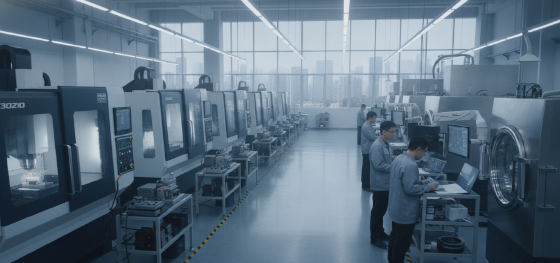
Leveraging our massive Shenzhen hybrid facility ensures you transition seamlessly from early mockups to high-volume pilot runs. We combine heavy 5-axis milling centers with rapid casting vacuum divisions to deliver exactly what your strict testing timeline demands. Protecting your operational budget from impossible manufacturing requests remains our absolute top priority.
Frequently Asked Questions: Polymer Physics
Does machining extruded plastics cause severe dimensional warpage over time?
Yes. Aggressively milling away the tough outer skin of an extruded plastic block violently releases massive internal mechanical tension. Machinists must utilize stress-relieved polymer billets and take multiple balanced cuts across both sides to prevent the component from actively bowing.
Can a spinning CNC endmill create a perfectly sharp internal square corner inside a plastic housing?
It remains mathematically and physically impossible. Round cutting tools always leave a curved internal radius exactly matching their own diameter. Hardware designers must intelligently engineer dog-bone reliefs into the CAD file to allow square mating electronics to assemble properly.
Why do highly detailed printed plastics suddenly fail high-impact drop tests despite feeling very solid?
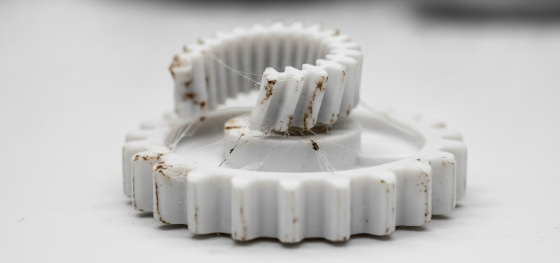
Layered printing naturally creates millions of microscopic internal voids. These microscopic gaps act as terrifying stress concentrators, instantly tearing the brittle material apart the moment heavy kinetic shock travels through the plastic structure.



ㆍPrivacy: We respect your privacy. Here you can find an example of a non-disclosure agreement. By submitting this form, you agree to our terms & conditions and privacy policy.