
Rapid Prototyping Advantages: Securing Investor Capital Quickly
Views: 2 Author: Allen Xiao Publish Time: 2025-12-18 Origin: Site


Skipping the physical validation phase simply to rush a product launch practically guarantees a devastating financial disaster. Ordering fifty thousand units based entirely on a pretty computer rendering means you are blindly gambling your entire corporate treasury on untested geometry. Hardware executives constantly rely on robust rapid prototyping advantages to actively hunt down hidden design flaws before those mistakes become permanently carved into expensive steel.

Procuring a physical, touchable model completely destroys the dangerous illusion created by flawless CAD software. When a mechanical engineer holds a freshly manufactured part, they instantly feel the awkward weight distribution, the sharp un-filleted corners, and the impossible assembly angles. Identifying these terrible mechanical friction points early represents the absolute core value of agile hardware development.
Evaluating true rapid prototyping advantages forces procurement managers to look far beyond simple cost savings. Agile manufacturing empowers ambitious hardware startups to physically iterate their mechanical designs three times in a single week. Pivoting your engineering strategy based on real-world kinetic feedback prevents millions of dollars in useless, un-sellable inventory from piling up in your warehouse.
Operating deep within the Shenzhen precision manufacturing hub equips our veteran tooling directors to heavily protect your launch schedule. We actively push engineering teams to break, shatter, and melt their early beta units intentionally. Exposing absolute physical limits early ensures your final global product rollout scales flawlessly without suffering embarrassing consumer recalls.
content:
Mastering Iterative Failure Recovery
Securing Critical Investor Capital Validation
Crushing NRE Tooling Amortization Risks
JUCHENG Hub: Dominating Hardware Scaling
Frequently Asked Questions: Prototyping Physics
Mastering Iterative Failure Recovery
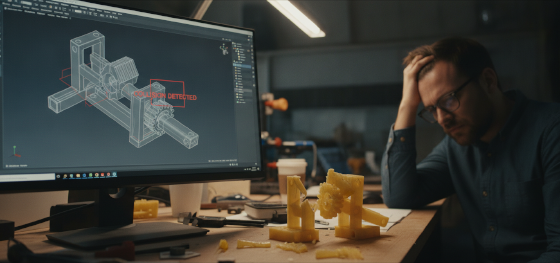
Does catching a one-millimeter geometric collision early actually save a hardware company from bankruptcy?
Absolutely. If two internal components collide by a single millimeter inside a hardened steel mold, fixing that mistake requires ripping the massive steel block out of the press and executing highly expensive electrical discharge machining to burn away the error.
Discovering a fatal geometric collision during the physical testing phase unlocks massive iterative failure recovery. Engineers can instantly rewrite the digital CAD geometry and order a brand new physical model the exact same afternoon. This extremely tight feedback loop allows product developers to fail fast, learn immediately, and completely eradicate mechanical blind spots.
Deploying advanced 3D Printing heavily accelerates this critical learning phase. Utilizing high-resolution SLA (Stereolithography) liquid resins delivers absolute micron-level accuracy, perfectly mimicking complex medical fluid manifolds and intricate snapping mechanisms. Holding these highly accurate models exposes impossible assembly procedures that look completely fine on a flat computer monitor.
Pivoting hardware designs rapidly relies entirely on uncompromised manufacturing agility. If a physical usability test reveals that an automotive handle feels terribly unergonomic, printing a slightly wider, modified version takes mere hours. Waiting six weeks for a traditional supplier to modify a heavy tool destroys your aggressive time-to-market advantage completely.
Securing Critical Investor Capital Validation
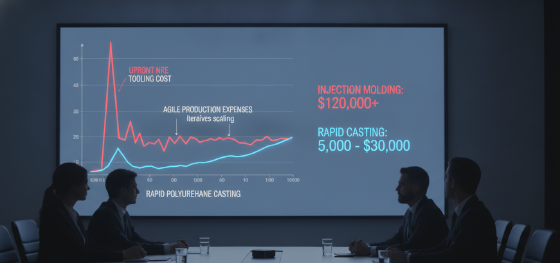
Will venture capitalists write a million-dollar check based entirely on a digital PowerPoint presentation?
Never. Serious hardware investors absolutely demand to hold, touch, and actively interact with a highly functional physical device before they ever authorize risking their investment capital.
Securing massive investor capital validation represents one of the most powerful rapid prototyping advantages available to ambitious hardware startups. Pitching a complex robotic concept using paper drawings makes your team look like amateur dreamers. Dropping a cold, heavy, perfectly machined metal assembly onto the boardroom table instantly proves your engineering team can actually execute the vision.
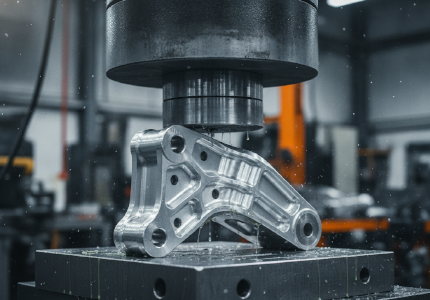
Handing a venture capitalist a premium CNC Machining model carved from solid aerospace Aluminum physically communicates structural dominance. When the investor feels the crisp, razor-sharp edges and the flawless mechanical clicking of the buttons, their perceived financial risk drops significantly. High-fidelity physical models sell the dream exponentially faster than any digital render ever could.
Executing this premium physical presentation prevents startups from prematurely diluting their company equity. Proving the mechanical concept works flawlessly allows founders to negotiate significantly higher corporate valuations. The upfront cost of carving a premium aluminum model pays for itself thousands of times over during intense equity negotiations.
| Prototyping Strategy | Primary Engineering Benefit | Financial Risk Mitigation | Optimal Startup Application |
|---|---|---|---|
| Visual SLA Resin Printing | Validates aesthetic ergonomics | Prevents molding ugly product shells | Early boardroom pitch meetings |
| Subtractive 5-Axis CNC Milling | Delivers monolithic physical strength | Proves load-bearing survival | Functional field testing for aerospace |
| Polyurethane Vacuum Casting | Simulates exact injection plastics | Avoids expensive steel tooling early | Low-volume beta tester distribution |
| Skipping Prototypes Entirely | None (Engineering suicide) | Catastrophic (Guarantees tooling failure) | Never recommended |
Crushing NRE Tooling Amortization Risks

Is ordering a mass-production steel mold the cheapest way to get the first one hundred functional units?
Not always. Paying fifty thousand dollars for a hard steel mold just to produce one hundred parts creates a terrifyingly high cost-per-unit, utterly destroying lean hardware budgets.
Slashing dangerous NRE tooling amortization dictates long-term hardware survival. If a medical device startup only requires two hundred physical enclosures for hospital clinical trials, investing heavy capital into permanent steel tooling represents horrific financial mismanagement. Agile manufacturing processes allow engineers to acquire functional units without sacrificing their entire cash runway upfront.
Transitioning prematurely into heavy Injection Molding completely freezes the geometric design. Once the P20 steel is violently carved, you absolutely cannot change the position of a mounting screw without incurring massive modification penalties. Rapid manufacturing keeps the CAD file totally fluid, allowing endless modifications right up until the final global product launch.
Bridging this terrifying financial gap frequently involves utilizing poured Polyurethane liquids into soft silicone molds. This brilliant hybrid process delivers hundreds of authentic, retail-ready ABS approximations in mere days. Engineers secure critical beta-testing validation while safely keeping the heavy mass-production budget securely locked in the corporate bank account.
JUCHENG Hub: Dominating Hardware Scaling

Why do elite hardware startups refuse to use cheap, disconnected makerspaces for their critical validation units?
Because amateur shops lack the hardcore metrology equipment and industrial metallurgy knowledge required to guarantee the prototype actually mimics final mass production behavior.
Partnering directly with Jucheng Precision unlocks extreme rapid prototyping advantages for aggressive global brands. Submitting your digital CAD file triggers an immediate, uncompromising Design for Manufacturability (DFM) audit by our senior tooling veterans. We violently expose hidden geometric flaws before they ever reach the physical cutting floor.
Centralizing your entire hardware lifecycle under our massive Shenzhen roof ensures absolute engineering accountability. We seamlessly integrate rapid printing, heavy subtractive milling, and low-volume casting without ever risking your sensitive intellectual property to third-party brokers. We protect your venture capital budget by delivering flawless mechanical truth every single time.
Frequently Asked Questions: Prototyping Physics

Can a highly detailed resin print accurately predict how an injection molded part will warp?
No. Layered resin cures entirely differently than molten plastics injected into a pressurized cavity. Predicting true injection warpage absolutely requires specialized mold flow analysis software to simulate the violent thermodynamic cooling dynamics accurately.
Why do beautifully printed plastic models suddenly shatter during basic drop testing?
Layered printing naturally creates millions of microscopic internal voids between the extruded lines. These microscopic gaps act as terrifying stress concentrators, instantly tearing the brittle material apart the moment heavy kinetic shock travels through the plastic structure.
Does testing multiple iterations simultaneously reduce the overall hardware timeline?
Absolutely. Smart procurement managers utilize hybrid facilities to produce three slightly different geometric variations in parallel. Field-testing multiple designs over the same weekend aggressively compresses the engineering feedback loop, slicing entire weeks off the final launch schedule.



ㆍPrivacy: We respect your privacy. Here you can find an example of a non-disclosure agreement. By submitting this form, you agree to our terms & conditions and privacy policy.