
Zinc Plating vs Nickel: Which Stops CNC Rust Cheaper?
Views: 4 Author: Allen Xiao Publish Time: 2025-09-01 Origin: Site


Procurement engineers blindly specifying anti-rust coatings frequently obliterate micron-level CNC tolerances. Ignorance regarding sacrificial galvanic layers leads directly to seized threaded fasteners during final mechanical assembly. Material science strictly dictates the operational survival rate of carbon steel components operating in aggressive, high-humidity environments.
Deciding between Zinc Plating and Hot-Dip Galvanizing establishes the financial and structural viability of your custom hardware. Both processes utilize raw zinc to stop aggressive oxidation, but they apply the metallic barrier using completely hostile physical mechanics. One relies on highly precise electrochemistry, while the other involves violently dropping raw steel into massive vats of molten metal.
Mastering this specific chemical conversion boundary actively prevents catastrophic non-recurring engineering (NRE) losses. Hardware developers must brutally evaluate hydrogen embrittlement risks, dimensional stack-up variables, and true batch pricing limits. Precision economics relies entirely on matching the surface treatment to the exact kinetic operational load.
content:
Zinc Plating vs Galvanizing: How Do They Compare?
When Should You Use Zinc Plating for CNC Parts?
When MUST You Avoid Zinc Plating on Hardened Steel?
How Does Dimensional Build-Up Ruin Threaded Holes?
What Are the True Cost Dynamics of Zinc Finishes?
How Does Jucheng Optimize Plating Workflows in Shenzhen?
What Are the Most Critical Zinc Plating FAQs?
Zinc Plating vs Galvanizing: How Do They Compare?
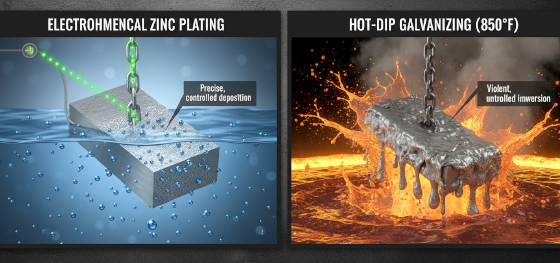
Zinc electroplating utilizes electrical currents to deposit a precise 5-to-15-micron layer, whereas hot-dip galvanizing immerses parts into molten zinc, creating a massive 50-to-100-micron slag-heavy coating.
Electroplating dominates high-precision manufacturing because chemical technicians can mathematically control the exact thickness of the protective barrier. Complex CNC machined gears and tightly tapped blind holes survive the electrolytic process without binding or losing their engineered geometry. The finished product emerges clean, bright, and geometrically faithful to the CAD file.
Hot-dip processes completely destroy tight mechanical tolerances. The thick, molten zinc violently pools inside blind bores and drips irregularly across flat mating surfaces as it cools. Machinists must physically re-tap hardened threads and face-mill critical mounting surfaces after galvanizing to restore any semblance of mechanical precision.
| Manufacturing Metric | Zinc Electroplating | Hot-Dip Galvanizing | Financial & Design Impact |
|---|---|---|---|
| Coating Thickness | 5 - 15 Microns | 50 - 100+ Microns | Galvanizing destroys precision press-fits |
| Corrosion Resistance | Moderate (Indoor/Automotive) | Extreme (Harsh Outdoor) | Hot-dip survives decades in marine zones |
| Surface Aesthetics | Smooth, glossy, multiple colors | Rough, dull grey spangle | Electroplating wins for cosmetic consumer parts |
| Thermal Distortion Risk | Zero (Room Temperature) | High (850°F Molten Bath) | Thin sheet metal warps badly in galvanizing |
When Should You Use Zinc Plating for CNC Parts?

Specify electroplated zinc exclusively for indoor mechanical assemblies, automotive undercarriage brackets, and precision fasteners requiring a sacrificial corrosion barrier without sacrificing tight geometric tolerances.
Mild carbon steels like 1018 and 1045 flash-rust instantly when exposed to minor atmospheric moisture. Zinc acts as a brilliant sacrificial anode, meaning the plating actively corrodes and chemically sacrifices itself to protect the underlying iron substrate. This galvanic protection prevents structural rust even if the plating suffers a deep surface scratch.
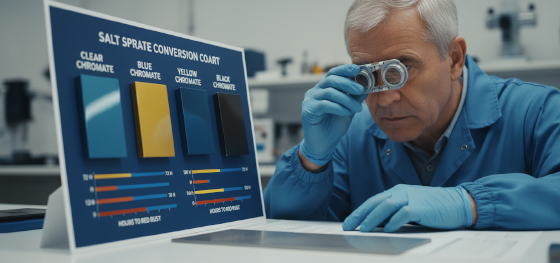
Adding a secondary chromate conversion coating directly over the zinc drastically multiplies this salt-spray resistance. Yellow hexavalent chromate historically provided extreme defense, but navigating modern RoHS compliance forces global manufacturers to adopt safer, eco-friendly trivalent chromium alternatives.
When MUST You Avoid Zinc Plating on Hardened Steel?

Deploying zinc electroplating on hardened steel exceeding HRC 40 guarantees catastrophic snapping under load due to an invisible, highly destructive metallurgical phenomenon called hydrogen embrittlement.
During the electrolytic acid pickling and plating process, microscopic hydrogen atoms aggressively penetrate the crystalline lattice of the high-carbon steel. These trapped gas molecules create immense internal pressure within the grain boundaries. The steel looks perfectly normal but loses all structural ductility.
Securing high-tensile bolts or hardened transmission shafts treated with zinc often results in delayed brittle fracture hours or even days after final assembly. Operators must perform a mandatory thermal bake-out cycle at 400°F within one hour of plating to force the trapped hydrogen gas out of the metallic matrix.
How Does Dimensional Build-Up Ruin Threaded Holes?
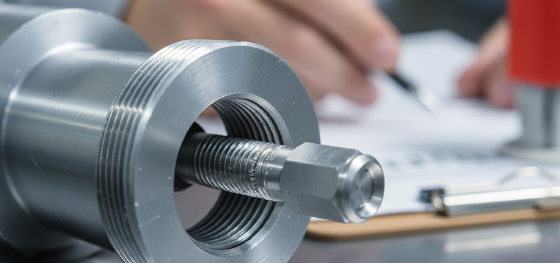
Electroplating adds physical material to the exterior surface, causing external shaft diameters to swell and internal thread pitch diameters to shrink, completely destroying calculated press-fits.
Standard protective zinc layers add roughly 0.0005 inches (12 microns) to every exposed mechanical surface. On a threaded fastener, this volumetric build-up occurs on both opposing flanks of the thread simultaneously, effectively doubling the dimensional error. Forcing a plated screw into a standard tapped hole causes severe thread galling and permanent seizing.
CAM programmers must proactively undercut external threads and over-tap internal holes during the primary milling sequence to compensate for this exact volumetric addition. Masking intricate blind holes with custom high-temperature silicone plugs provides another costly but absolutely necessary safeguard against tolerance failure.
What Are the True Cost Dynamics of Zinc Finishes?
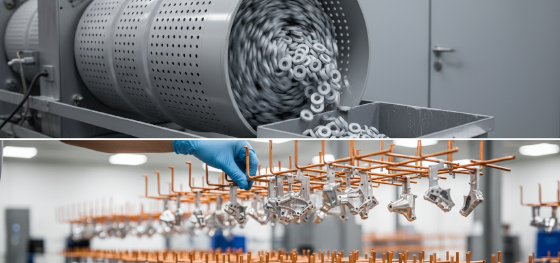
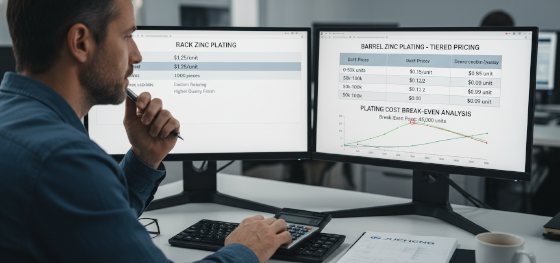
Electroplating remains incredibly cheap for high-volume batches due to massive barrel processing capabilities, but demanding rack plating for delicate aerospace parts instantly spikes the per-unit invoice.
Dropping ten thousand carbon steel washers into a rotating perforated barrel inside a chemical bath costs mere fractions of a penny per part. The automated tumbling line requires absolute zero manual handling beyond the initial loading phase. This efficiency dominates the economics of basic fastener production.
Fragile motor housings or heavy transmission gears cannot survive the violent tumbling action of barrel plating without sustaining severe edge damage. Technicians must manually hang these critical components on custom copper racks to prevent cosmetic destruction and ensure uniform electrical conductivity. This intense manual labor completely alters the financial break-even calculation.
How Does Jucheng Optimize Plating Workflows in Shenzhen?
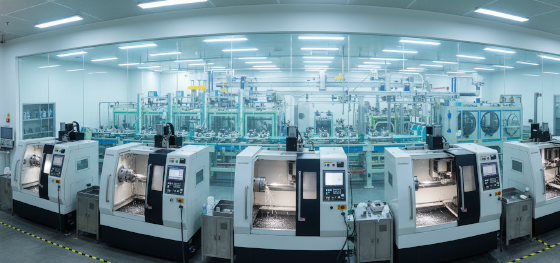
Operating within the Shenzhen precision manufacturing hub, Jucheng centralizes rigid multi-axis milling and heavily audited chemical finishing lines to completely eliminate logistical tolerance failures.
Navigating [2026] global hardware procurement demands true single-source fabrication. Shipping machined carbon steel across the city to an unverified plating vendor invites fatal flash rust and uncontrolled hydrogen embrittlement risks. We execute the entire process seamlessly under one heavily audited 8000-square-meter roof.
Backed by rigorous ISO9001:2015 and IATF16949 quality protocols, our engineering team executes aggressive Free DFM reviews. We mathematically calculate your exact plating offset requirements before spinning our 150+ CNC machines. Supported by our strict No MOQ policy, we deliver aerospace-grade survival instantly.
What Are the Most Critical Zinc Plating FAQs?
Resolving hardcore electrochemical boundaries prevents devastating assembly line recalls when transitioning custom steel hardware into harsh physical environments.
Can you apply zinc plating over stainless steel components?
No, it represents a severe metallurgical conflict. Stainless steel naturally generates a passive chromium oxide layer that inherently resists rust. Electroplating zinc onto this passive surface prevents proper molecular adhesion, causing the zinc to peel off uselessly in large flakes.
Does the color of the chromate conversion affect the final durability?
Yes, significantly. Clear or blue trivalent chromates offer excellent baseline protection suitable for indoor environments. Yellow iridescent or olive drab chromates historically provide a much thicker chemical barrier, surviving significantly longer in aggressive salt-spray testing chambers.
How does surface roughness (Ra) impact the final plated aesthetic?
Electroplating conforms exactly to the underlying substrate geometry. A 10-micron zinc layer cannot fill in deep CNC milling tool marks or hide severe gouges. Achieving a highly reflective, mirror-like plated surface absolutely mandates aggressive manual polishing prior to the chemical bath.


ㆍPrivacy: We respect your privacy. Here you can find an example of a non-disclosure agreement. By submitting this form, you agree to our terms & conditions and privacy policy.